Example. The company, the people and the numbers on this page are invented to show the shape. Your readout uses only the figures you give me, and it never says how to fix anything.
1. What I looked at.
How a course booking goes from the website to the calendar to an invoice.
Example. One line, in your words.
2. What I saw.
The booking arrives by email. Someone types it into the scheduling tool, then into the invoicing tool, then into a spreadsheet the owner uses to see the month. When a field is wrong, it is wrong in three places.
Example. Two or three lines, using your exact phrases.
3. What is slowing it down.
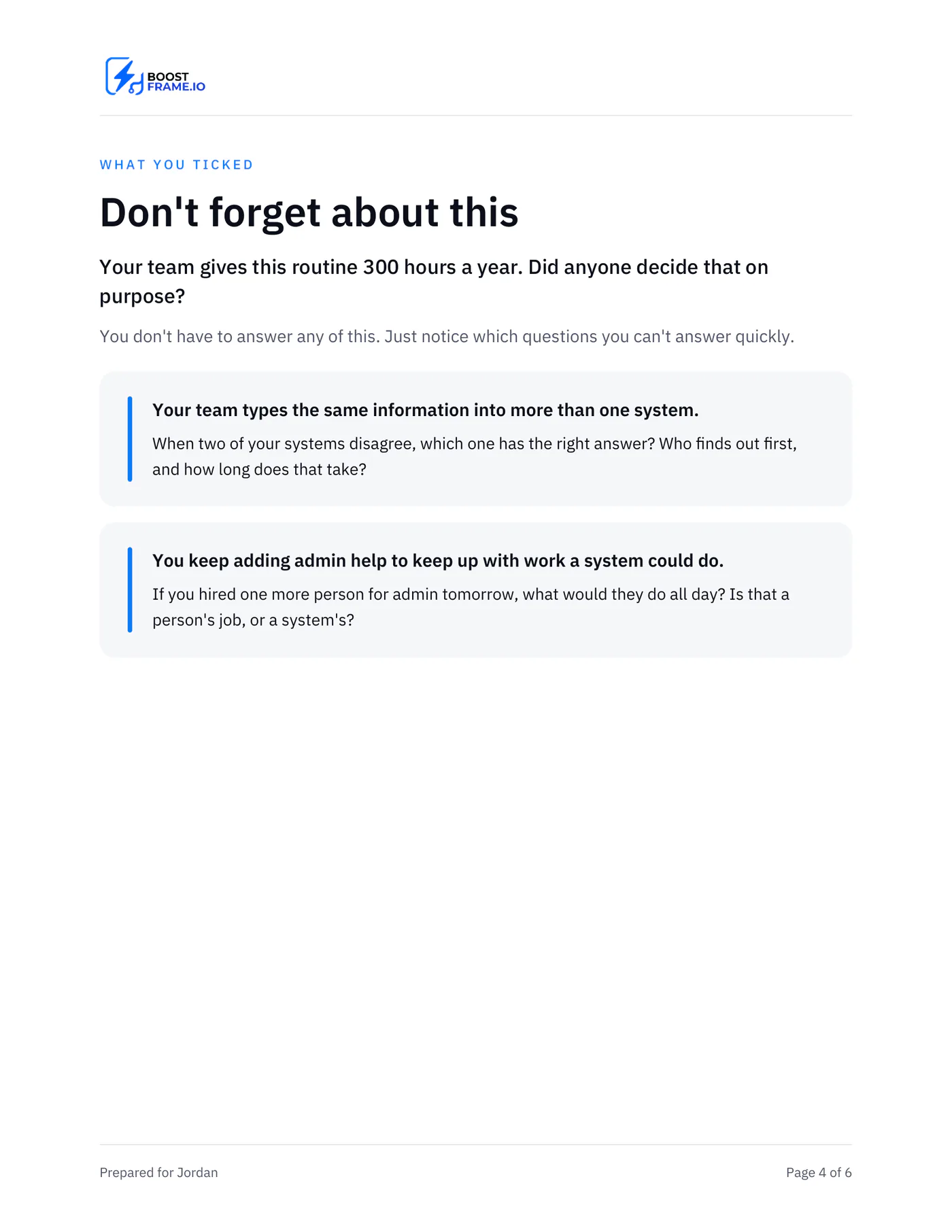
- The same booking is entered three times.
- Nothing tells anyone when a booking is entered wrong.
- Only one person knows how the spreadsheet is put together.
What is wrong, one line each, never how to fix it.
4. What it costs you, in your figures.
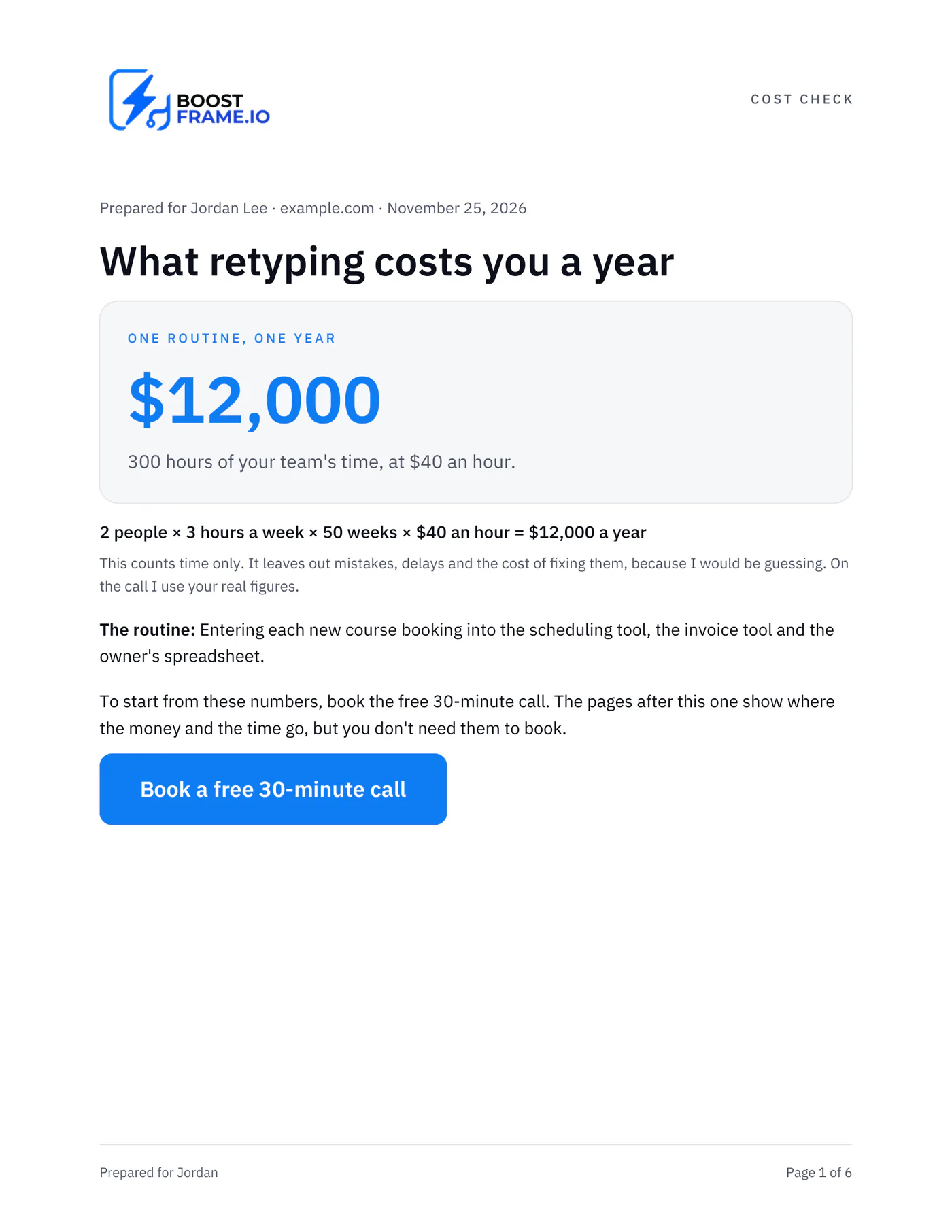
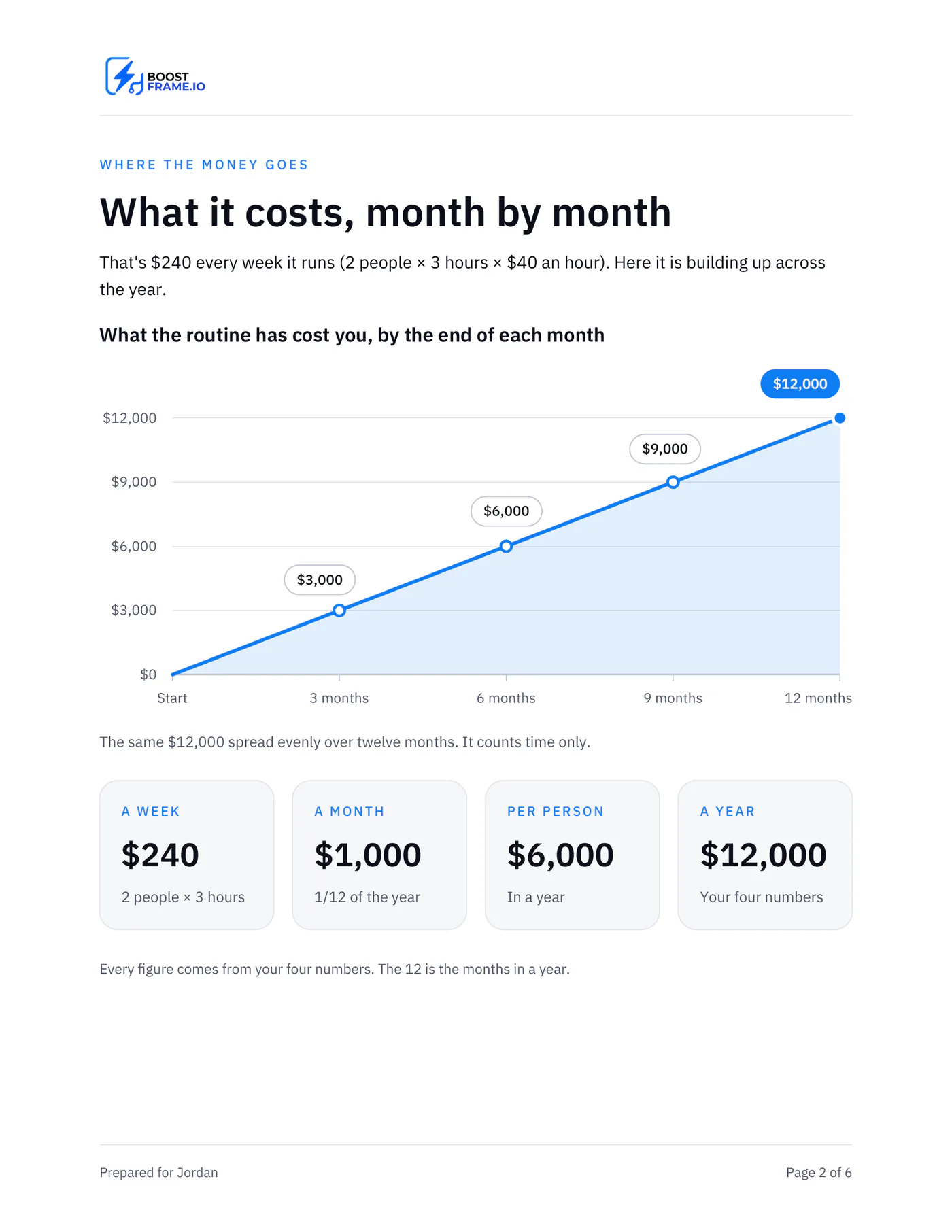
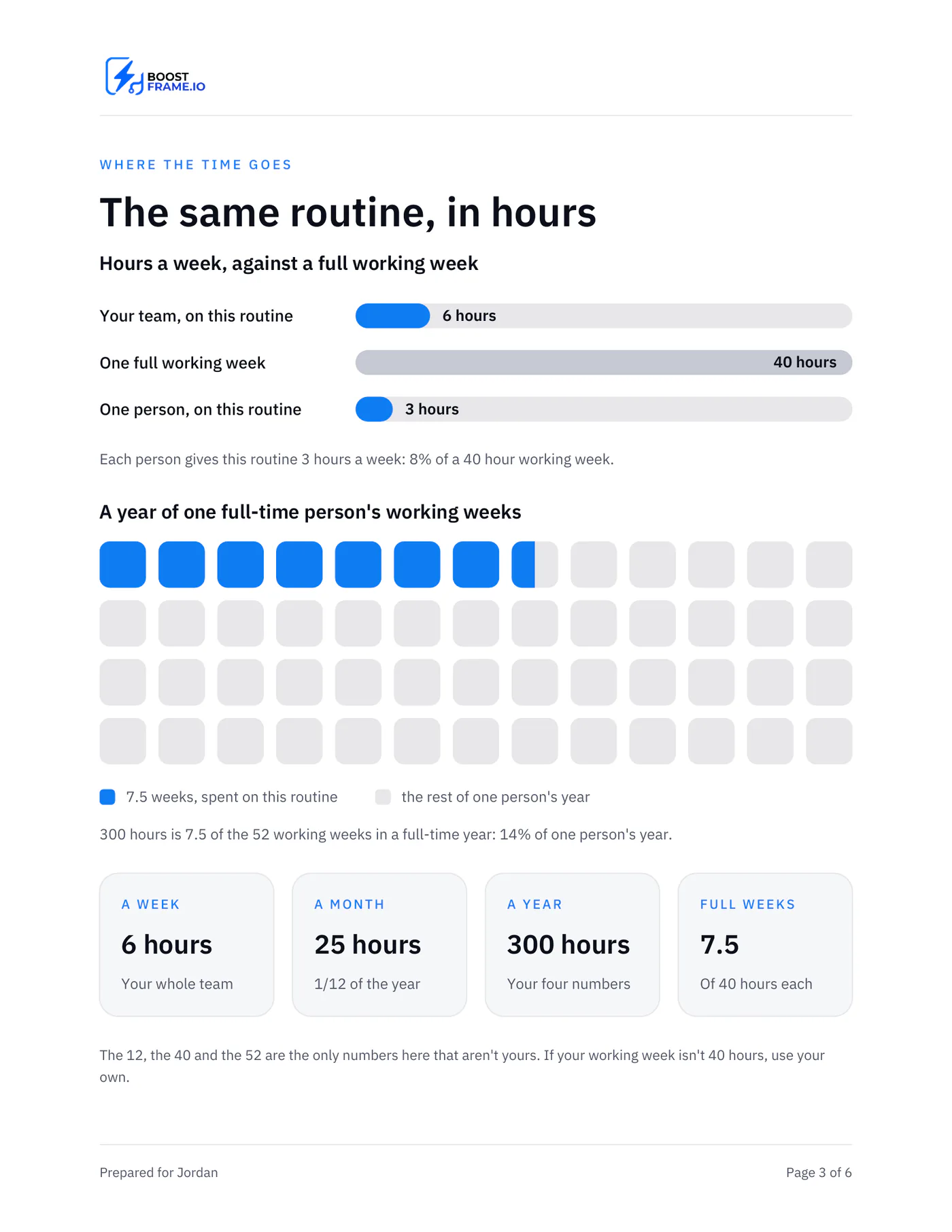
Example numbers: 2 people, 6 hours a week between them, 50 weeks a year.
6 hours x 50 weeks = 300 hours a year spent re-entering bookings.
Only numbers you gave me, with the arithmetic written out. No estimates and no savings you did not state.
5. What to check next.
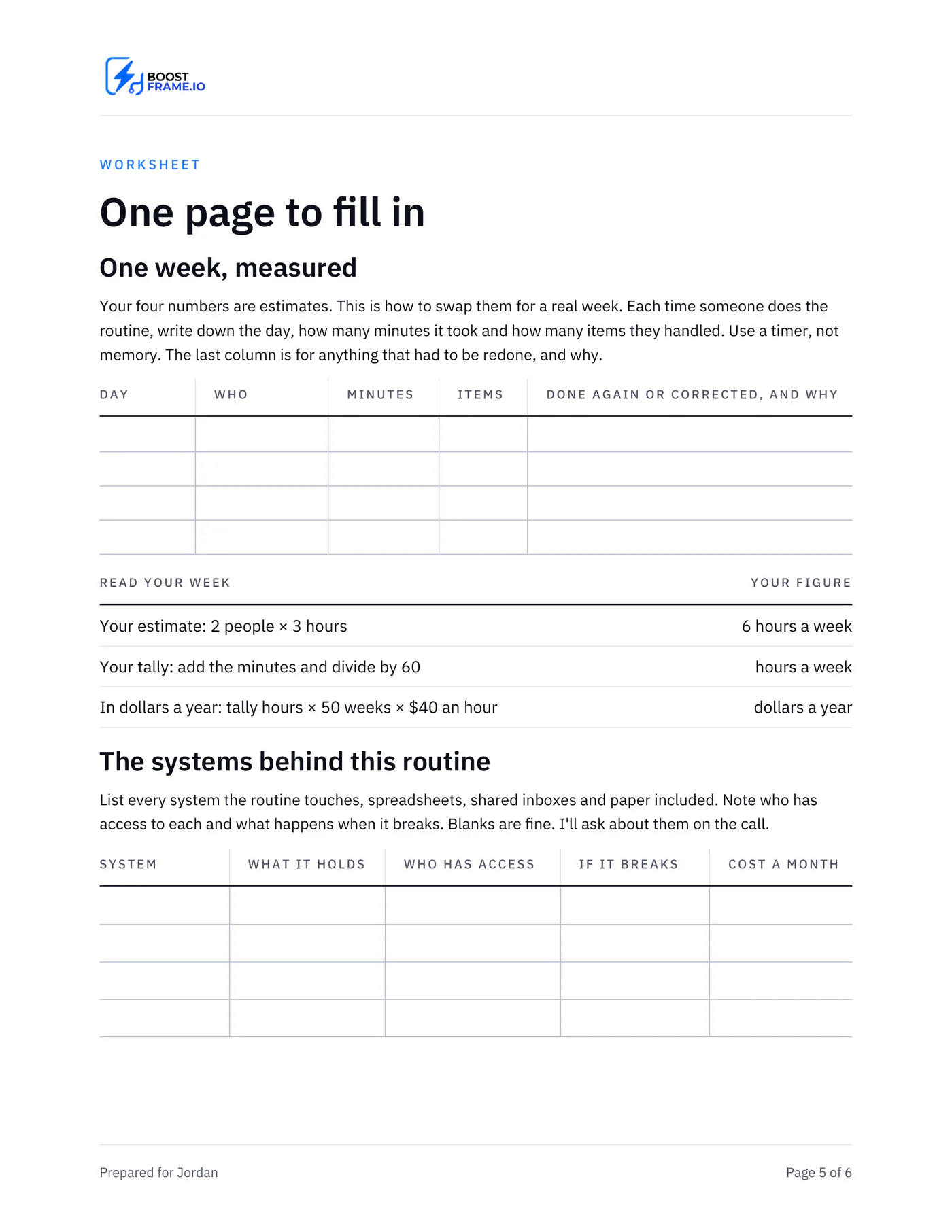
The systems behind this routine, who has access to each, and what happens when one of them breaks.
What the X-Ray would look at.
6. A price range for fixing it.
One range, for what I saw. It is not shown on this example.
One range, built from a fixed price and never from hours.
7. One safe step you can take today.
Something small that helps without being the fix. For example: remove a former employee's access, or write down who holds the admin login.
Small, and not the fix.
8. The next step.
The 5-Day X-Ray, in three lines, if the readout calls for it.
Or, if the readout finds one small clear fix, a quote for that fix.