Lead Nurture Automation for Salons and Barbershops — Fill Chairs
Recover the 9pm Instagram DM, fill cancelled slots from a ranked standby list, and rebook lapsed regulars — without adding hours to your front desk.
The problem
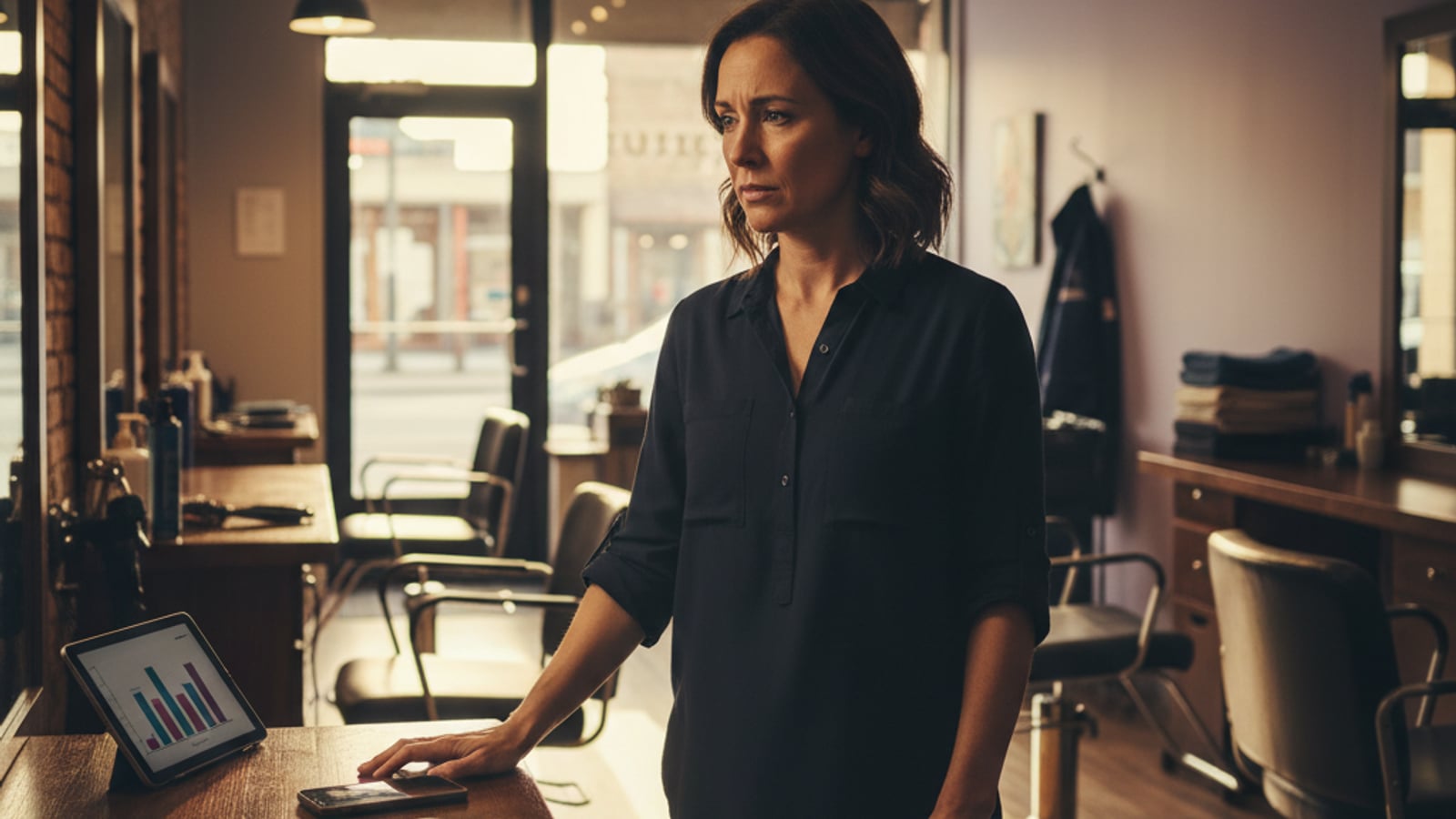
Most salons and barbershops lose chair time in the same three places, and the losses are quiet. They do not show up as a complaint or a one-star review. They show up as a Tuesday afternoon with two empty chairs on the floor, a Friday at 4pm slot that nobody filled when the original client cancelled at 9am, and a client list of three hundred people whose last visit was eight months ago that nobody has time to work.
After-hours DMs and missed calls
A prospect sees a balayage shot on Instagram at 9pm on a Tuesday, sends a DM, and waits. Or fills out the contact form on the shop's website at 8pm. Or calls the main line at 7:30pm and the call goes to voicemail. Boulevard's 2025 salon trends report finds that roughly 46% of salon bookings happen when the shop is closed — and one 2023 dataset showed 64% of clients booking outside 9-to-5 hours. Most shops do not have a way to answer those inquiries until the next morning. By then the prospect has often DM'd two other shops, gotten a friendly reply from one of them, and booked. Harvard Business Review's analysis of 1.25 million online leads found firms responding within an hour were nearly seven times more likely to qualify the lead than firms that waited even an hour longer — and more than sixty times more likely than firms that waited 24 hours. The salon math is even less forgiving than the B2B version, because the prospect is shopping with their phone in hand and has three other tabs open.
Short-notice cancellations going empty
Mrs. Lee texts at 9am to cancel her 2pm color appointment. The front desk is on three other calls. By the time anyone has bandwidth to work the standby list, it is 11am, the list is in someone's head or in a Google doc nobody updated, and the 2pm slot quietly goes empty. The cost is not a small number — color appointments are among the highest-margin chair hours in the week, and one unfilled slot can wipe out the contribution from two reminder-driven recovered no-shows.
Rebooking that drifts past the interval
A regular comes in for a 6-week fade or an 8-week color refresh. The stylist meant to mention a follow-up booking at checkout but ran behind on the previous client. The front desk meant to send a reminder a few weeks out and then got busy. The interval drifts to 10 weeks, then 14, and the client either books somewhere closer to home or just stops being a regular. Booksy reports that structured automated reminders can cut no-show rates by up to 70%, with forgetfulness driving roughly 28% of misses in the first place — and the same forgetfulness is what quietly stretches the rebooking interval.
None of these are problems the team is doing wrong. They are problems of capacity. There is no front desk in the country that has time to reply to Instagram DMs at 9pm, work a ranked standby list before the day starts, and run a paced four-touch reactivation campaign on every lapsed regular, while also answering the phone, checking clients in, and processing checkouts.

What changes for your business
The autopilot fills the gap where the front desk runs out of hours. It is three flows that run in the background of the existing shop workflow, written in your shop's voice, and handed off to the team the moment a client actually replies.
New-client inquiry response in 5 minutes
An Instagram DM, a website form fill, a missed call, or a Google business profile message triggers an automated first reply within roughly 5 minutes — confirming the shop received the inquiry, acknowledging what the prospect asked about (a specific service, a specific stylist, a first-time visit, a wedding party), and offering either a couple of likely booking windows or a self-schedule link tied to the right calendar. The 9pm DM gets a 9:04pm acknowledgement instead of an 8am callback that often misses the prospect entirely. By morning, the inquiry is warm, the intent is captured, and the front desk picks up a conversation that is already moving toward booked rather than a cold message that has to be re-pitched from the top.
Ranked standby fill on cancellations
When the schedule registers a same-day or short-notice cancellation, the autopilot pulls a ranked standby list — clients who flagged themselves as wanting an earlier appointment, sorted by stylist and service — and texts the open window out. The first client to confirm gets the slot; the rest get a courteous note that it filled. The 2pm color opening that would have gone empty becomes a recovered chair hour, the stylist is not standing around between clients, and the front desk did not spend two hours of their morning chasing the fill.
Rebooking reactivation as a sequence
Rebooking reactivation is built as a sequence, not a single ping. A client overdue at their normal interval gets a soft prompt. A client two cycles past due gets a different prompt with a different ask. A client six months out gets an acknowledgement of the gap and an easy way back in. Each touch references the stylist they saw last, uses the channel the client tends to respond to (text, email, or both), and stops the moment the client books or replies. The lapsed-client list stops being someone's unfinished project and starts being a working system.
What changes for the shop business: the chairs run closer to capacity, the front desk gets the weekend DM and voicemail pile sorted before they walk in, the stylists' books fill in the gaps that interval drift used to leave, and the cost of slow follow-up — measured in lost lifetime value across the chair, the future referral, and the product purchases that would have come with the visits — stops being absorbed silently.
What we build for your salon
A first-phase deployment is scoped to ship in 2 to 4 weeks and covers the three flows in plain language. None of this requires the shop to change its booking platform, retrain the front desk, or move the client record out of where it already lives.
For new-client inquiry response, the deliverable is a configured intake that catches inquiries from Instagram DMs, the shop's website, Google business profile messages, and missed phone calls, and fires a first reply within roughly 5 minutes. The message is written in the shop's voice, captures intent (service requested, stylist preference, first-time versus existing client, urgency), and offers either booking windows or a self-schedule link. Replies route to the front desk in the channel the team already uses, with the full conversation history attached so nobody has to ask the client to repeat themselves.
For standby fill, the deliverable is a ranked standby list built from client preferences (earlier appointment requested, willing to come on short notice, specific stylist they want to see, service they are waiting on) and a cancellation trigger that pulls the right candidates and texts the open slot. The team can see which client confirmed and from where, and the booking platform gets the new appointment recorded the way it already does.
For rebooking reactivation, the deliverable is a multi-touch sequence keyed to each client's typical interval — different tones for the recently overdue, the moderately lapsed, and the long-gone regular — and the sequence stops the moment the client books or replies. The messaging is stylist-aware, so a client who saw a specific stylist on their last visit gets routed back to that chair when possible.
We also wire up a simple monthly report so the shop owner can see what the autopilot recovered — new clients booked from after-hours inquiries, chair hours filled from the standby list, regulars rebooked from the reactivation flow — without having to dig through the booking platform to find it.
Outcomes you should expect
What this delivers
- Answer Instagram DMs, website inquiries, and missed calls that land outside business hours inside a few minutes — in your shop's voice — so the prospect does not move on to the next salon on their search results.
- Fill same-day and short-notice cancellations from a ranked standby list before the chair goes empty, typically recovering 2 to 5 chair hours per stylist per week that would have been lost margin.
- Run paced rebooking nudges that respect the stylist-client relationship, so the 6-week interval stays 6 weeks instead of drifting to 10 or 12.
- Reactivate clients who lapsed three, six, or twelve months out with segmented messages — different tone for the recent miss than for the long-gone regular — without anyone working a spreadsheet.
- Cut the after-hours pile your front desk walks into on Monday by handling the first touch automatically and queuing the right next step for the team.
Industry data
By the numbers
Harvard Business Review's analysis of 1.25 million online sales leads found that firms responding within an hour were nearly seven times more likely to qualify the lead than firms that waited just an hour longer — and more than sixty times more likely than firms that waited 24 hours.
Booksy's industry guidance reports that salons and barbershops using structured automated appointment reminders can cut their no-show rate by up to 70%, with forgetfulness driving roughly 28% of missed appointments in the first place.
Boulevard's salon retention research, summarized in Salon Today, found first-time clients who book online return for a second visit about 78% of the time versus roughly 39% for walk-ins — close to a 2x retention difference at the moment most new clients are won or lost.
Boulevard's 2025 salon trends report finds that roughly 46% of salon bookings happen when the shop is closed, with one 2023 dataset showing 64% of clients booking outside 9-to-5 hours — making after-hours response the single largest unattended booking channel for most shops.
The U.S. Bureau of Labor Statistics projects barbers, hairstylists, and cosmetologists to grow 5% from 2024 to 2034 with about 84,200 openings annually — a healthy-demand industry where the operational bottleneck is book management and follow-up, not foot traffic.
Illustrative scenario
What this typically looks like
The scenario below is illustrative — a representative outcome for a business that fits this service profile, not a claimed client engagement.
This is an illustrative scenario, not a description of a specific client engagement. It shows how the math typically lines up for a representative shop.
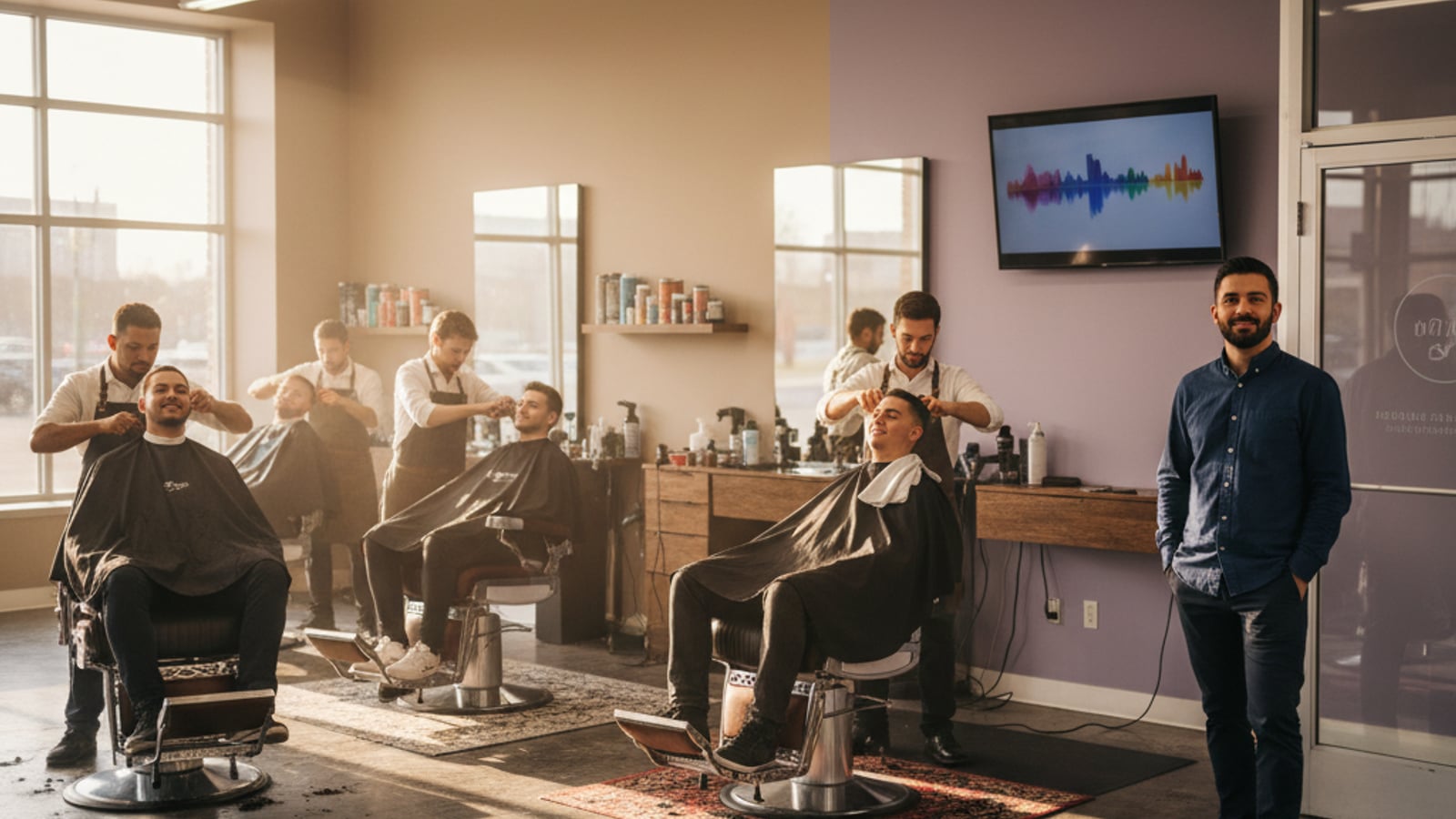
Picture a four-chair neighborhood salon running at around 80% schedule capacity. It fields roughly 40 new-client inquiries a month across Instagram DMs, website forms, Google business profile messages, and missed phone calls — and about half of those arrive after hours. The front desk is competent and full-time, but cannot get to evening DMs until the morning and cannot work a standby list before about 10am most days. Lapsed regulars get one half-hearted recall email at the 6-month mark and then quietly fall off the list.
In a typical month, that shop might recover 5 to 8 new-client inquiries that would have been lost to slow follow-up — booked first-time visits that would otherwise have gone to a competitor with a faster reply. Boulevard's retention research found first-time clients who book online return about 78% of the time versus roughly 39% for walk-ins, so each of those recovered first-time visits is also a meaningfully better second-visit bet. On the standby side, recovering 2 to 5 chair hours per stylist per week from same-day cancellations adds up across four chairs to a real chunk of monthly recovered production at the average ticket of a color or fade. The rebooking flow tends to bring back a steady trickle — typically 8 to 20 lapsed regulars a month back onto their normal interval, which compounds because each one also reopens future product purchases and referrals.
The actual numbers vary with the shop. The shape of the math does not.
Common questions
What buyers ask before reaching out
What is lead nurture automation for a salon or barbershop, in plain terms?
It is a set of automatic follow-up messages — text, Instagram DM reply, email, and sometimes a missed-call callback — that fire when a new-client inquiry comes in, when a chair opens from a cancellation, or when a regular is overdue for their next visit. The shop still owns every client relationship; the automation handles the first touch and the persistence, so a 9pm DM gets a friendly reply inside a few minutes instead of waiting until morning. Nothing goes out that a team member would not have sent themselves — the system just guarantees it gets sent in the right window, in the shop's voice.
Will this work with my booking system — Booksy, Square, Vagaro, Fresha, or Boulevard?
We run the autopilot alongside whichever booking system you already use rather than replacing it. The exact connection depends on what your platform exposes — some shops have us push reminders and reactivation messages through the platform's own messaging layer, others have us run a middle layer that watches the schedule and writes back where allowed. We do not promise a deep two-way integration we have not actually built. On the first call we walk through your setup and tell you what is reachable and what is not, in plain language, before quoting anything.
Does this replace my front desk or my stylists?
No. The front desk still owns booking, the in-person greeting, and any conversation where a client replies. Stylists still own the chair time and the rebook conversation at checkout. What changes is the load — instead of walking in Monday to a stack of weekend DMs, voicemails, and ignored confirmation requests, the team starts the day with already-acknowledged inquiries, a worked standby list, and a clear short list of clients who actually need a human reply.
How does this handle Instagram DMs and other social channels?
Instagram DMs are increasingly the front door for new clients, especially for color, extensions, and barbershop fade work where the prospect saw a photo before they ever looked at a website. The autopilot watches the DM channel during off-hours and replies with a friendly acknowledgement, captures what the prospect asked about, and either offers booking windows or routes the conversation to your front desk first thing in the morning. The conversation history travels with the contact, so the team is not asking the client to repeat themselves.
How does the cancellation fill actually work?
When the schedule registers a same-day or short-notice cancellation, the system pulls a ranked standby list — clients who flagged themselves as wanting an earlier slot, sorted by the stylist they see and the service they are waiting on — and texts them the open window. The first client to confirm gets the slot; the rest get a polite note that it filled. The front desk does not have to scroll through client lists at 9am hoping to fill a 2pm opening; the autopilot has already worked the list before the day starts.
How do you handle the fact that clients book with specific stylists?
Stylist-specific booking is the norm in salons and barbershops, and the flows are built for that from the start. Reminders, rebook nudges, and reactivation messages reference the stylist by name and route the client back to the same chair. When a regular's stylist has an open slot and the client is due, the message reflects that match instead of treating the shop as one anonymous chair. The relationship the client built with their stylist is reinforced rather than flattened.
What does pricing look like and how long does setup take?
Pricing depends on the size of the shop, the booking platform in use, and how many of the three flows — new-client inquiry, standby fill, lapsed-client reactivation — go live in the first phase. Most single-location shops run a fixed-scope first phase in the low four figures of setup with a modest monthly run rate after that, and go live in 2 to 4 weeks. We confirm scope and pricing on a 15-minute call before any work starts, with no per-message charges that scale with client volume.
Ready to see what this looks like for your business?
A free 15-minute call. We talk about your business, the time and revenue you'd unlock with the right automation, and what the first 30 days could look like.