
Document Automation for Salons and Barbershops — Faster Check-In
Consent forms, patch-test logs, booth-rental agreements, photo releases, and gift-card terms — handled before the client sits down, filed where the shop can find them, signed on a phone in under a minute.
The problem
The paperwork in a salon or barbershop has a quiet way of getting expensive. None of it feels like the work — the work is the cut, the color, the conversation in the chair. The paperwork is the thing the front desk does in the margins, the way the owner caught up on Sunday night, the form the stylist meant to get signed and forgot because the client was already in the bowl.
Chemical consent at the chair
A client books a single-process color refresh online for Saturday. The front desk meant to send the consent form and the allergy disclosure ahead of the appointment but the week got away from them. The client arrives, sits down, and now there is a clipboard moment — five minutes of awkward paperwork while the timer on the prior client's color is going off. The stylist either rushes the consent and skips the allergy questions that matter, or the appointment runs long and the next client waits. Professional Beauty Association guidance on chemical services is unambiguous about this: a documented consultation and signed consent should be on file before any color or chemical service, and a patch test for new color clients should be performed at least 48 hours in advance and logged in the client record. The shop knows this. The shop also knows that the paper-clipboard version of it routinely loses to a busy Saturday.
Patch-test logs that don't exist
A new color client is supposed to come in 48 hours before their first color service, get a patch test, and have the result recorded. In practice, the patch test gets done verbally, the client says they felt nothing, and nothing gets written down. Six weeks later when something does react, the shop has no documentation that the test was even offered. That is a customer-service problem before it is a legal one, and it is the kind of problem a small business does not see coming until it shows up.
Booth-rental agreements in a binder
Most shops that run on booth-rental have a paper agreement signed when the renter started — sometimes years ago — and then nobody touches it again, even when the rent changes, the days change, or a new renter steps in. Booksy's business guidance on these arrangements is direct: a written rental agreement covering rent, hours, services allowed, insurance, and termination is the baseline protection for the shop owner, because verbal arrangements routinely fall apart when a renter leaves with a client list or a tax question lands on the wrong party. The shop knows this too. The shop also knows that the agreement is in a binder somewhere, possibly in the back room, possibly at the owner's house.
Photo releases asked too late
A stylist finishes a color transformation that would be a perfect social post. They want to share it. They are not sure if the client signed off on photos at any point. They ask awkwardly at the register, the client says yes politely, and the moment is gone. Or they do not ask, and the post does not happen — which means the social calendar has another blank day and the stylist's portfolio quietly stalls.
Gift cards and no-show policy with no signature
The shop has a policy. The client may have heard about it verbally at booking. They have almost certainly not signed off on it. When the client misses a Friday afternoon slot and the policy comes up, the conversation gets harder than it needs to be — because there is no signed record of the client agreeing to the terms when they booked.
None of these are failures of the team. They are failures of capacity. The shop has stylists, a front desk, and a client in the bowl. The paperwork was usually going to lose.
What changes for your business
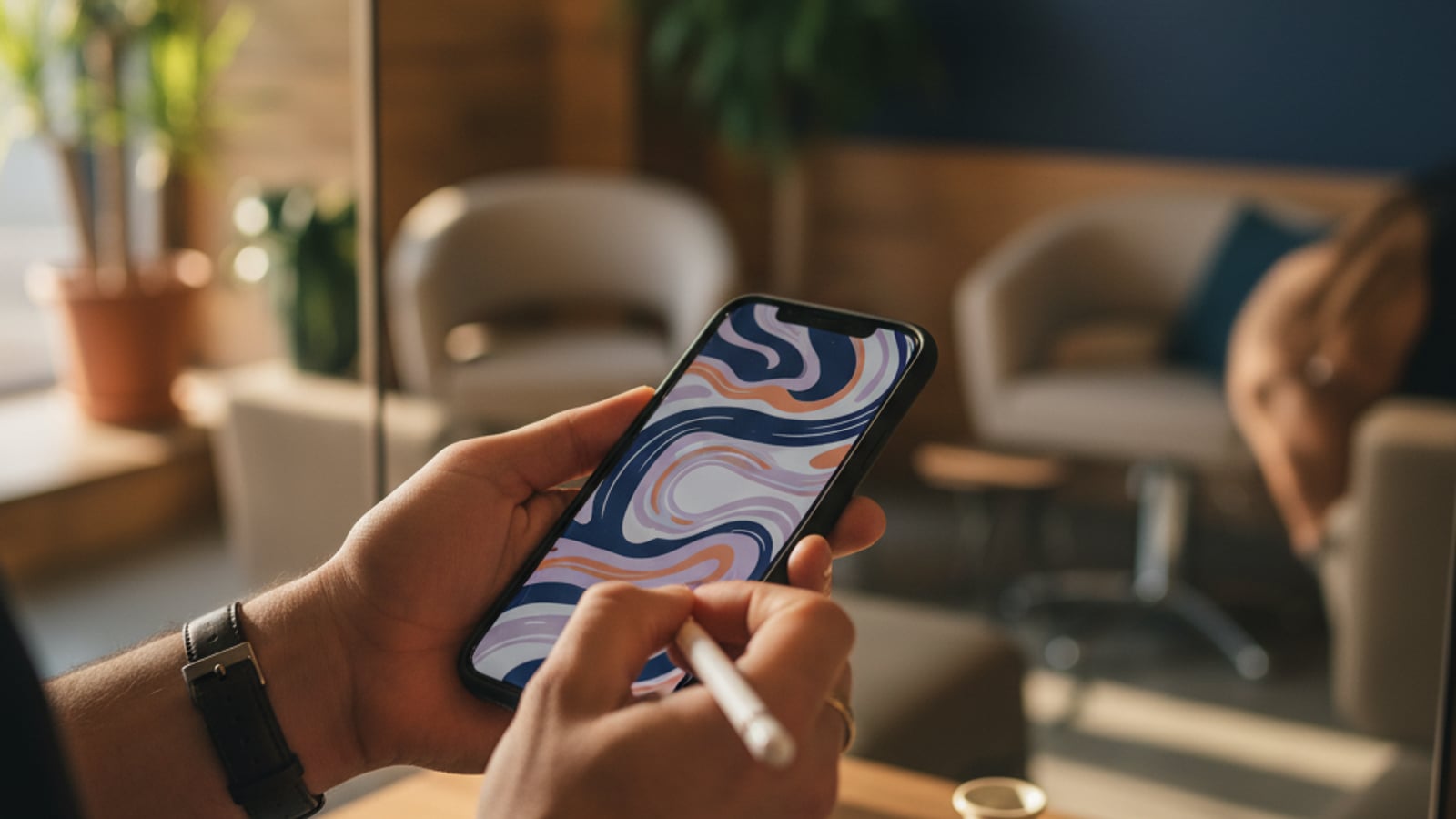
Document automation for a salon or barbershop closes the paperwork gap without adding another platform the team has to learn. The model is straightforward: the moment a trigger happens in your booking flow — a new color client books, a chemical service is on the schedule, a booth renter starts, a gift card is purchased, a client cancels for the second time and needs to re-acknowledge the policy — the system generates the right document, pre-filled with what the shop already knows, and texts or emails the client a link to sign on their phone. The signed document lands in the client record. The shop gets a notification that it cleared. Nobody opened a template.
Chemical consent before the appointment
The color and chemical service consent goes out the day before the appointment. The client signs on their phone in under a minute, the form lands in their record, and the stylist sees a green checkmark in the booking system before the client walks in. The clipboard moment at the chair disappears. The patch-test log gets handled the same way — when a new color client books, the system schedules the 48-hour patch-test reminder, the client confirms the test result on their phone, and the timestamp goes into the record. If a reaction shows up later, there is documentation. If nothing happens, the shop has a clean file and a faster check-in.
Living booth-rental agreements
The booth-rental agreement becomes a living document instead of a paper one. The owner updates terms in one place. When the rent changes, the renter gets a fresh version to sign. When a new renter joins, the agreement is sent before they bring their kit in. Every signed version is timestamped, attributed, and findable in 30 seconds — including from the owner's phone on a Sunday night when something comes up.
Photo release bundled into intake
The photo release gets bundled into the new-client intake, so it is handled once at the start of the relationship instead of chased every time a stylist wants to post. The client opts in fully, opts out, or opts in only for the shop's own channels — and the stylist sees the answer in the client record at a glance. The social posts that used to quietly not happen because nobody was sure start happening, which feeds the social media presence the shop depends on for new-client acquisition.
Policies signed at booking, not at the conflict
The gift-card terms and the no-show policy get attached to the booking confirmation flow. The client acknowledges the policy in writing when they book, not when they miss an appointment. Booksy's industry guidance on no-show policies makes the point bluntly — clients are far more likely to honor a policy they actively agreed to in writing than one that was explained verbally at the chair. The conversation about a missed slot becomes a referral to the signed acknowledgment instead of a confrontation.
What changes for the shop business: chair time stays on the chair, not on the clipboard. The forms that mattered get signed before the client walks in. The forms that protect the owner are findable and current. The social posts that promote the shop's work get the consent they need at the start. And the paperwork the front desk used to do in the margins — between phone calls, between check-ins, on a Sunday night — stops needing to happen at all.

What we build for your salon
A first-phase deployment is scoped to ship in two to three weeks and covers the documents that matter most for a salon or barbershop. None of this requires you to change your booking platform, retrain your stylists, or move the client record out of where it lives today.
For client-facing consent and intake, the deliverable is a connected flow that triggers the right document at the right moment in the booking life cycle. New color clients get the patch-test confirmation 48 hours ahead, with the result logged when they confirm. Chemical service clients get the consent and allergy disclosure the day before the appointment. New-client intake bundles the photo-release opt-in with the medical and contact information you already collect. Existing clients re-acknowledge the no-show policy the next time they book if it has been updated. Every signed document lands in the client record, attached to that client's profile in the shop's source of truth.
For booth-rental and chair-rental, the deliverable is a current, version-controlled agreement template that the owner can update in one place and resend to any renter without hunting down the prior version. Each signed version is timestamped, attributed, and stored in a place the owner can find from a phone in under a minute. When a new renter joins, the agreement is sent the same way — before they bring their kit in, not after.
For gift cards, the deliverable is a terms-and-conditions document attached to the gift-card purchase flow, so the buyer agrees to the terms at the point of sale. The signed acknowledgment lives with the gift-card record, which removes the awkward conversation when a recipient tries to redeem the card outside the terms.
We also wire up a simple monthly report so the owner can see what the document layer is doing — how many consent forms cleared before the appointment, what the photo-release opt-in rate looks like, which booth-rental agreements are due for a refresh, how many clients acknowledged a policy update — without having to dig through client records to find any of it.
The templates stay yours. Your wording, your branding, your clauses. When you change a policy, update a service menu, or add a new chemical line, you update the template once and every document generated after that point uses the new version. The shop owns the documents. The system just runs them.
Outcomes you should expect
What this delivers
- Get color consent, allergy disclosure, and patch-test confirmation signed and filed before the client arrives — so the chair time stays on the color, not on the clipboard.
- Replace the paper booth-rental agreement that sits in a folder somewhere with a signed, dated, version-controlled document the owner can find in 30 seconds.
- Capture photo-release consent on the same intake the client already fills out — so the stylist can post the transformation to social without chasing permission after the fact.
- Tie gift-card terms, no-show policies, and chemical service disclosures to the booking confirmation, so every client has agreed to the policy in writing before they sit in the chair.
- Stop the 'where did we file Sarah's color formula and patch test' problem — every document lives in the client record, retrievable from any chair on a Saturday afternoon.
Industry data
By the numbers
Professional Beauty Association guidance on chemical service consent states that a documented consultation and signed consent should be on file before any color or chemical service, and that patch tests for new color clients should be performed at least 48 hours in advance and logged in the client record — both as a safety practice and as a defense if an adverse reaction occurs.
Booksy business guidance on booth-rental and chair-rental arrangements emphasizes that a written rental agreement covering rent, hours, services allowed, insurance, and termination terms is the baseline protection for the shop owner — verbal arrangements routinely fall apart when a renter leaves with a client list or a tax question lands on the wrong party.
Docusign's published customer data reports that businesses using eSignature see contract turnaround time drop by an average of 15 days, productivity improve by 37%, and roughly 80% of agreements completed in under a day — with 44% completed in under 15 minutes — compared with print-sign-scan workflows.
Docusign reports that eSignature users typically save between $4 and $10 per document on hard costs, see contract turnaround times improve by over 75% on average, and that 73% of users hit a positive ROI in under three months — with 90% returning the investment inside six months.
Booksy industry guidance on salon no-show and cancellation policies notes that clients are far more likely to honor a policy they actively agreed to in writing at booking — which is why forward-looking shops attach the policy to the intake or booking confirmation flow rather than relying on a verbal explanation at the chair.
Illustrative scenario
What this typically looks like
The scenario below is illustrative — a representative outcome for a business that fits this service profile, not a claimed client engagement.
This is an illustrative scenario, not a description of a specific client engagement. It shows how the math typically lines up.
Picture a four-stylist neighborhood salon offering cut, color, balayage, and a small extension service, with two booth renters and a steady gift-card business in the December stretch. Today, the front desk hand-prints chemical service consent forms each morning based on the day's schedule and clips them to the appointment book. New color clients are supposed to come in 48 hours ahead for a patch test, but in practice about half of those tests happen verbally at the start of the actual color appointment because the patch-test visit is hard to schedule. The booth-rental agreements live in a folder in the owner's office, signed in 2023, untouched since. The photo-release question gets asked at the register when a stylist wants to post, with mixed results. The no-show policy is on the website but nobody has actively agreed to it.
After installing the automated document flow, a few things typically shift across the first two months. Color and chemical consent forms clear before the appointment in close to every case, because the friction of signing on a phone is lower than the friction of a paper form at the chair. The patch-test compliance rate climbs because the reminder is automatic and the result confirmation takes a few seconds on the client's phone. The booth-rental agreements get rebuilt as current documents that both renters re-sign, and the owner gets a clean file. The photo-release opt-in rate at intake typically runs in the 70-to-85% range, which means the stylists have a pre-cleared library of clients whose work they can share without asking. And the no-show conversations that used to be awkward become a referral to the signed acknowledgment — most clients accept the policy without argument when there is a record of them agreeing to it.
None of those individual changes is dramatic. Together, they typically add up to several hours a week of front-desk time recovered, a meaningfully cleaner record-keeping situation, and a paperwork posture the owner does not have to worry about. The actual numbers will vary with the shop. The shape of the math does not.
Common questions
What buyers ask before reaching out
Which salon and barbershop documents can actually be automated?
The ones your shop fills out over and over with the same shape per client. Color and chemical service consent forms. Patch-test confirmation logs for new color clients. Allergy and medical disclosure intake. Photo-release consent for social posts. Gift-card purchase terms. No-show and cancellation policy acknowledgment. Booth-rental and chair-rental agreements for the stylists who work that way. Extension and lash service waivers where you offer them. If the form has the same five to fifteen fields that change per client or per renter, it can be automated.
Will this work with our booking system — Booksy, Square, Vagaro, Fresha, or Boulevard?
We design the document layer to sit alongside whatever booking system the shop already runs rather than trying to replace it. Some platforms expose enough client data through an API or export that we can pull the name, service, stylist, and appointment time straight into the document. Others work better with a thin intake form that captures what we need and writes back to the shop's records. We do not promise a deep two-way integration we have not actually built — on the first call we walk through your setup and tell you exactly what is reachable.
Does the client have to download an app or learn new software?
No. The client gets a text or email link the day before the appointment — or right after they book if the service requires a 48-hour patch test — and signs on their phone in under a minute. The document lands in your shop's record and a copy goes to the client. They never create an account, never download anything, and never have to figure out a new portal. The friction stays close to zero, which is why the completion rate on these flows is high.
Is an automated consent form actually defensible if something goes wrong?
Yes. The federal ESIGN Act and the state UETA laws have given electronic signatures the same legal weight as handwritten ones for most business documents since 2000, and a signed PDF with a timestamp, IP record, and the client's actual phone-screen signature carries the same evidentiary weight as a paper form — often more, because the audit trail is automatic. For salons, the value is less about the rare lawsuit and more about routine accountability — proof of patch-test logging, proof of allergy disclosure, proof the client agreed to the no-show policy when they booked.
How does this help with booth-rental and chair-rental agreements?
Most booth-rental setups still run on a paper agreement signed when the renter started and then never touched again, even when the rent changes or the renter switches days. The automated version turns the agreement into a current, version-controlled document — when terms change, the owner updates the template, sends the new version, and the renter signs without anyone tracking down a binder. The shop also gets a clean record of who signed which version, when, and what they agreed to. That matters when a renter leaves with a client list or a tax question lands on the wrong party.
What about photo releases for the social media posts the stylists want to share?
Photo-release consent gets bundled into the intake or booking confirmation so it is handled once at the start of the client relationship instead of chased after the fact. The wording covers what most shops actually do — before-and-after photos, color transformations, fresh-cut shots, the occasional reel — and the client can opt in fully, opt out, or opt in only for the shop's own channels. The stylist then knows at a glance whether a given client has cleared their photo for social, which removes the awkward in-chair ask and the social posts that quietly sit unposted because nobody was sure.
How long does the build take and what happens during it?
Most salon and barbershop builds run two to three weeks from kickoff to live. Week one is template review — we sit down with what you already use for consent, intake, photo release, booth-rental, and policy acknowledgment, rebuild what needs rebuilding, and confirm the wording with you. Week two is the build and the connection to your booking flow. Week three is testing on real client records and the handoff. The shop is not down at any point during the build — the existing paper or PDF flow keeps running until the automation goes live.
What does this typically cost for a salon or barbershop?
Setup typically lands in the low-to-mid four figures depending on how many document types and how many integration touchpoints — a single-chair barbershop that wants consent and gift-card terms looks different from a six-stylist salon with booth renters and a full chemical service menu. The monthly run cost covers the document generation and e-signature volume and usually sits in the low three figures. We scope it on the fit call before any work starts, with no per-signature charges that scale unpredictably as your shop grows.
Ready to see what this looks like for your business?
A free 15-minute call. We talk about your business, the time and revenue you'd unlock with the right automation, and what the first 30 days could look like.