Social Media Content for Restaurants and Cafes — Without the Scramble
Food photography reels, seasonal-menu announcements, and chef behind-the-scenes across every channel — without the manager opening Canva on a Sunday night.
The problem
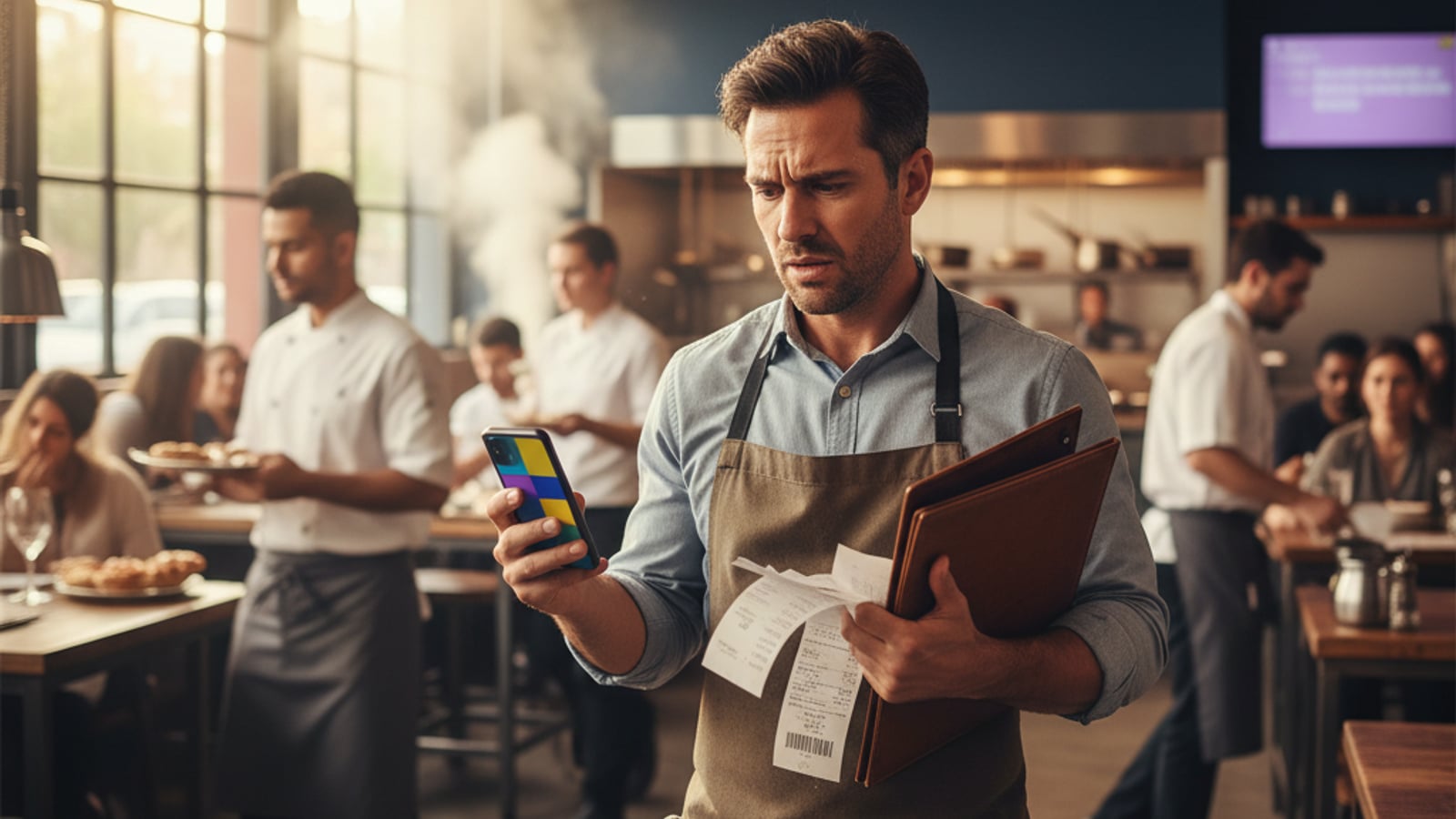
Every independent restaurant has the same uncomfortable conversation about social media at some point. The chef knows the feed should be active. The owner sees competitor restaurants down the street posting daily plating reels and brunch carousels. The manager has tried to keep up — sometimes personally, sometimes by handing it to a server, sometimes by hiring a $1,500-a-month agency that mostly recycled stock food photos. None of it sticks for more than a few months. The Instagram feed has a flurry of posts during a slow January, then nothing through the busy spring. The Facebook page has a last post from before Restaurant Week. The Google Business Profile has photos of a menu that was changed two seasons ago. Meanwhile a prospective diner lands on the profile from a Google search, sees a feed that looks abandoned, and quietly books the place across town instead.
The time tax during service
Sprout Social's 2024 industry data, drawn from nearly 3 billion messages across more than a million brand profiles, puts the average posting cadence at 9.5 posts per day across networks — roughly five Facebook posts, one to two Instagram posts, two on X, one on LinkedIn. No owner-operated restaurant is hitting that by hand, and most cannot sustain three Instagram posts a week through a full season before the calendar goes dark. The chef who tried doing it personally got six weeks in before the schedule rotation ate the discipline. The server who was supposed to run it dropped it the first week the floor got rough. The agency that was supposed to handle it sent generic pasta-Tuesday graphics that could have been any restaurant on their roster.
Food content works — when it's actually yours
Sprout Social's complete guide to social media for bars and restaurants notes that Instagram hosts more than 371 million posts tagged #food and 41 million tagged #drinks, making food and drink photography one of the most-engaged content categories on the platform, with 88% of people influenced by online reviews and comments when deciding where to eat. OpenTable's marketing guidance is even sharper for restaurants specifically: 60% of people use Instagram to find a restaurant, and 79% of Millennials and 68% of Gen Z weigh a restaurant's Instagram and TikTok-worthiness — its visual look on social — when deciding where to eat. The diner is scrolling for somewhere to eat tonight. A restaurant with no recent food photography is invisible during that scroll. A restaurant whose last post was a stock graphic loses on the same axis.
Short-form video is the format you can't shoot
HubSpot's State of Marketing Report finds short-form video delivers the highest ROI of any content format and ranks number one for both lead generation and engagement, with Instagram (76% of marketers) leading TikTok (54%) for return — exactly the format restaurants are best positioned to produce and most reluctant to actually shoot. Static menu photos and event flyers do not compete with a 15-second reel of the new pasta dish being plated. But the chef does not have time to learn iMovie. The server's clips are sideways. The manager's footage is shaky. The format that works is the format the restaurant is least equipped to produce on its own.
The cost of staying quiet does not show up on the restaurant's P&L as a line item. It shows up as the Tuesday-night covers that did not materialize because a prospective diner scrolling at 5:30pm did not see the restaurant in their feed. It shows up as the seasonal menu launch that went out to 8 regulars on the email list instead of 800 followers on Instagram. It shows up as the Google Business Profile that does not rank in the local 3-pack because Google's prominence signal flags the listing as inactive. And in a year when the National Restaurant Association's 2025 State of the Restaurant Industry report found 61% of operators saw a decline in customer traffic from 2023 to 2024 and 39% were unprofitable, those missed covers are not a vanity problem — they are the margin.
What changes for your business
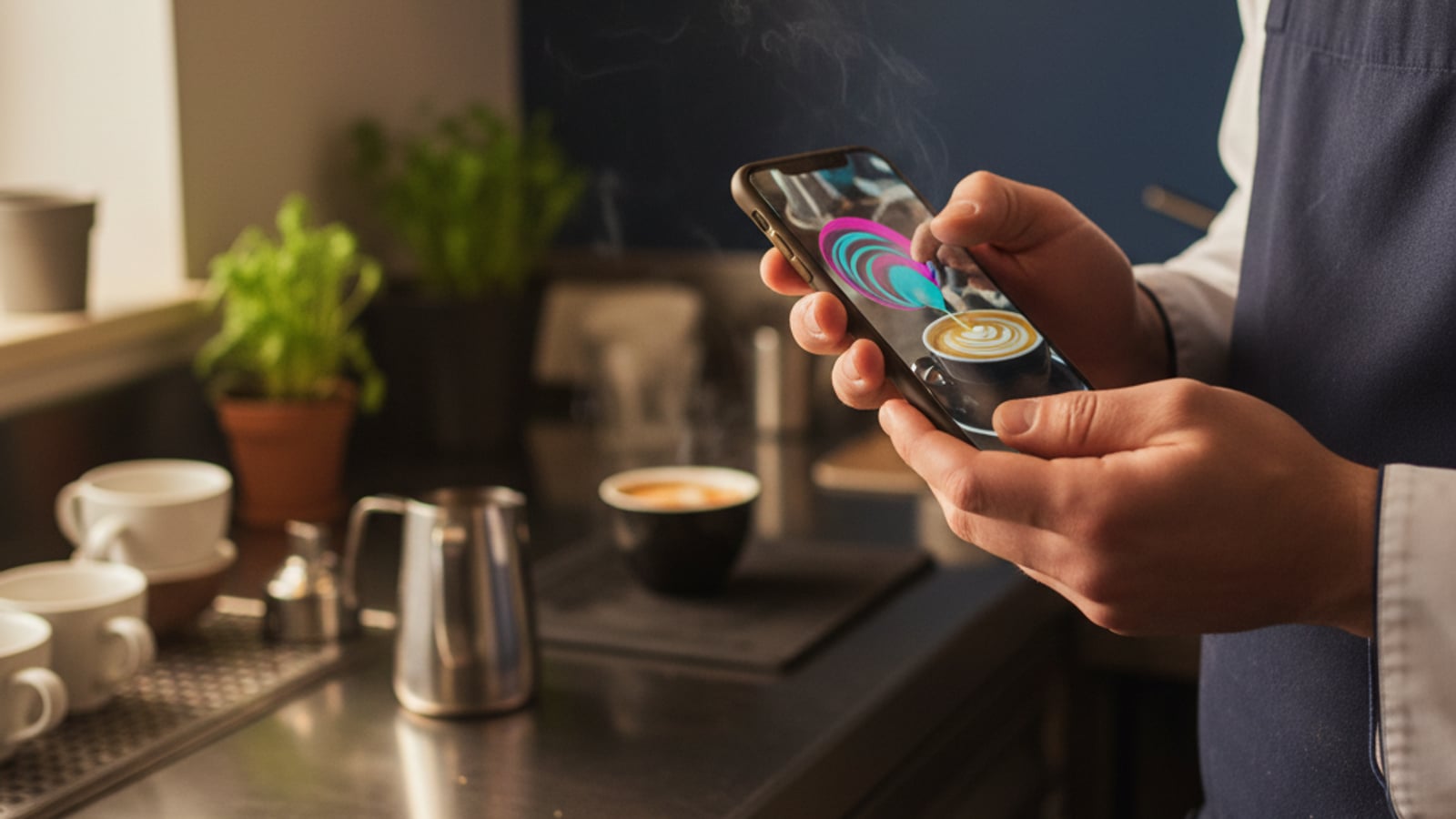
A social media multiplier built for a restaurant or cafe fixes the time problem, the format problem, and the consistency problem in the same workflow. The input is small enough to sustain during a real service week — two to three short phone videos a week, captured during the natural rhythm of prep and service by whoever on the team has ten seconds and a phone. A 15-second clip of the new pasta dish being plated. A close-up of the espresso pull at 2pm. The bread coming out of the oven at 6am. A 30-second walk-through of the dining room set for Friday service. A quick tour of what came in from the farm this morning. Two to four minutes total per week, dropped into a private upload link as the moment happens.
A shotlist anyone on the team can follow
The shotlist is the part that makes it sustainable. Most "we'll do social ourselves" attempts die because nobody on the team knows what they are supposed to be capturing. The multiplier ships with a built-in shotlist tuned to the restaurant's category and menu — "this week we need three dish close-ups, one behind-the-scenes prep moment, one front-of-house scene, and one chef commentary clip" — and the list updates based on what is being launched, what season is coming up, what is performing, and what gaps the feed needs to fill. Any staff member with a phone can pick up the shotlist and capture a usable clip in ten seconds without thinking. The chef stays on the line. The shotlist does the planning.
One clip, multi-format output
From those weekly clips, the multiplier produces a full month of finished content across every channel that matters for a restaurant. Each dish clip becomes a vertical food-photography reel for Instagram and TikTok, a square version for the feed, a quote graphic with the dish name and ingredients, an image carousel built from the b-roll, a long-form caption in the restaurant's voice, a Google Business Profile post, a section in the next email newsletter, and a paragraph for the upcoming-events page on the website. Behind-the-scenes chef clips become longer-form content that builds personality and credibility — the kind of footage that gets reshared and tagged. Seasonal-menu announcements get rolled out across every channel in a coordinated wave, so when the spring menu drops, every diner who follows the restaurant anywhere sees it within the same week. Event and holiday-special promotion — Valentine's prix fixe, the Wednesday wine night, Mother's Day brunch — gets a paced rollout starting two to three weeks ahead, with the reels and carousels intensifying as the date approaches.
Google Business Profile feeding the 3-pack
The Google Business Profile side gets a weekly post built from the same source footage, because consistent GBP activity is one of the prominence signals that influences whether the restaurant shows up in the local 3-pack for "restaurants near me" and "best Italian near me"-style searches. The 3-pack is where the highest-converting visibility lives for a local restaurant, because the searcher has already decided they want to eat — they are choosing which restaurant. A listing that posts weekly and has recent dish photography wins that comparison against a listing that has been quiet for six months.
What this changes for the restaurant business is the part that compounds. Weeknight covers lift first, because the prospective diner scrolling Instagram at 5:30pm on a Tuesday now sees the restaurant in their feed with a fresh plating reel from this week. Loyalty between visits builds second, because regulars get a steady drip of reasons to come back — a new pasta on Tuesday, the chef's special on Friday, the wine dinner in three weeks. Discovery from the broader food-curious audience builds third and slowest, as the feed accumulates the kind of visual catalog that gets tagged by local influencers and showcased in neighborhood "best of" lists. None of this happens from one great reel. All of it happens when the feed is visibly active for six months in a row, which is what the multiplier makes possible without the chef ever opening a video editor.
What we build for your restaurant
The setup runs three to four weeks from kickoff to live and lands as a system that runs on a two-to-three-clips-a-week input from the team forever, without further engineering on the restaurant's end.
The shotlist build comes first. We sit down with the chef, the GM, and the floor lead and map the restaurant's content shape across a typical week — which dishes deserve close-ups, which prep moments are visually distinctive, which front-of-house scenes capture the room well, what the seasonal calendar looks like across the next year, what events recur, what holidays the kitchen runs special menus for. From that we build a rotating shotlist that the team can pick up on any phone during any shift and capture a usable clip in ten seconds. The shotlist updates monthly based on what is launching, what is performing on the feeds, and what gaps need filling.
The voice profile and visual identity capture comes next. We pull from the menu, the existing marketing copy, the way the chef describes dishes in person, the words the team actually uses with diners — and we build a voice guide and a visual identity treatment that runs across every output. Fonts, color, lower-third treatment for chef commentary, opening and closing card design, the way dish names get graphic-treated. The treatment travels with every clip regardless of who recorded the source footage, so the line cook's Tuesday capture and the chef's Saturday commentary read as the same restaurant brand on the feed.
The multi-format production pipeline takes each uploaded clip and produces vertical reels for Instagram and TikTok, square feed versions, horizontal cuts for Facebook and YouTube, accurate auto-captioning verified against the audio, image carousels built from b-roll and dish details, quote graphics from the strongest chef lines and dish descriptions, long-form captions tuned to each platform's tone, a weekly Google Business Profile post, a section for the email newsletter, and a paragraph for the upcoming-events page on the restaurant's website.
The seasonal-menu and event launch workflow handles the coordinated rollouts. When the spring menu drops, every channel sees the announcement within the same week — Instagram reels for the new dishes, a carousel for the full menu, a TikTok walk-through, a Facebook post with the launch date, a Google Business Profile announcement, an email to the regulars list, and a blog excerpt that links to the menu page. The same workflow runs for Valentine's, Mother's Day, Restaurant Week, the chef's tasting dinner, the Wednesday wine night, and whatever else the restaurant has in the calendar.
The scheduling layer posts each format at the time the platform analytics show the restaurant's audience engages — the lunch-decision window, the early-evening "where should we eat" scroll, the late-night reservation booking. Posts are paced across the week so the feeds stay actively updated without flooding any one day. The Google Business Profile gets a weekly post in the same content stream.
The engagement routing layer surfaces comments, DMs, Google Business Profile messages, and Instagram reservation inquiries to the right person on the team in the channel they already use — so the moment an engaged prospective diner asks about a Friday reservation, the host stand gets the notification and the automation steps aside.
The weekly report shows what went out, what performed, which dishes are getting the most reach, which formats are doing the heaviest work, which moments from the source footage are getting cut and reused most often, and which Google searches are driving GBP impressions. The chef can scan it in two minutes and see what is working without learning analytics dashboards.
The restaurant stays in control of the input — what dishes get featured, what events to promote, what tone the chef wants on a given launch. We do the building, the wiring, the production, the captioning, the scheduling, and the tuning. After the system goes live, the team's weekly task is capturing two to three short clips during normal service and responding to the engaged-diner notifications that land in the right inbox.
Outcomes you should expect
What this delivers
- Keep the restaurant visibly active on Instagram, TikTok, Facebook, and Google Business Profile every week — without the chef or manager opening Canva on a Sunday night.
- Lift weeknight covers by putting recent food photography, seasonal-menu reels, and chef behind-the-scenes in front of the prospective diners scrolling Instagram and TikTok for somewhere to eat this week.
- Build a content system that runs on a built-in shotlist so any staff member with a phone — the line cook, the server, the host — can capture usable footage during a normal service.
- Promote seasonal menu changes, holiday events, and weekly specials across every channel from one input — instead of the manager retyping the same announcement into Instagram, Facebook, the email list, and Google Business Profile.
- Cut social-media production time from the 4 to 8 hours a week most independents try (and quietly drop after a month) down to roughly 30 minutes a month of phone-recording during prep or service.
- Stay credible on Google searches when a prospective diner looks up the restaurant — an active Google Business Profile with recent posts is one of the prominence signals that influences whether the restaurant shows up in the local 3-pack for searches like 'restaurants near me'.
- Build loyalty between visits by giving regulars something to follow — a new pasta on Tuesday, a chef's special on Friday, a wine dinner two weeks out — so the restaurant stays top of mind when they decide where to eat this weekend.
Industry data
By the numbers
Sprout Social's complete guide to social media for restaurants and bars notes that Instagram alone hosts more than 371 million posts tagged #food and 41 million tagged #drinks — making food and beverage photography one of the most-engaged content categories on the platform, with 88% of people influenced by online reviews and comments when deciding where to eat.
Sprout Social's 2024 analysis, drawn from nearly 3 billion messages across more than a million public brand profiles, puts the industry-average posting cadence at 9.5 posts per day across networks — roughly 5 on Facebook, 1-2 on Instagram, 2 on X, and 1 on LinkedIn — a volume no owner-operated restaurant or cafe can sustain by hand.
HubSpot's State of Marketing Report finds that short-form video has the highest ROI of any content format and ranks number one for lead generation and engagement, with 83% of video marketers already using the format and Instagram (76% of marketers) leading TikTok (54%) as the platform delivering the best return — a structural reason food and drink reels outperform static posts.
OpenTable's marketing guidance reports that 60% of people use Instagram to find a restaurant, and that 79% of Millennials and 68% of Gen Z weigh a restaurant's Instagram and TikTok-worthiness — its visual look on social — when deciding where to eat, making organic social a discovery channel on par with search.
The National Restaurant Association's 2025 State of the Restaurant Industry report projects $1.5 trillion in foodservice sales and 15.9 million workers by year end, but flags that 61% of operators saw a decline in customer traffic from 2023 to 2024 and 39% were unprofitable — making weeknight cover recovery one of the highest-leverage operational problems an independent can solve.
Illustrative scenario
What this typically looks like
The scenario below is illustrative — a representative outcome for a business that fits this service profile, not a claimed client engagement.
This is an illustrative scenario, not a description of a specific client engagement. It shows the shape of the math, not a promised outcome.
Picture a 65-seat neighborhood Italian spot in a walkable suburban downtown. Today the Instagram has 940 followers, a last post from five weeks ago of a generic Restaurant Week graphic that pulled 18 likes, and a Google Business Profile last touched when the patio reopened in spring. The restaurant runs four nights a week plus Sunday brunch. Weeknight covers have been soft for two quarters. The chef knows social would help. The chef does not have an hour a week to learn editing software.
After the multiplier goes live, the weekly capture task settles into the kitchen's rhythm. The line cook grabs a 15-second close-up of the new bucatini being plated during the Tuesday menu refresh. The dessert station films a 10-second clip of the panna cotta getting a balsamic strawberry on Wednesday. The host captures a 30-second walk-through of the dining room candlelit for Friday service. The chef records a 90-second behind-the-scenes on Saturday morning about the porchetta that has been in slow roast since the night before. Those four clips become roughly 32 posts across Instagram, TikTok, Facebook, Google Business Profile, and the email newsletter over the following week — food photography reels for the dishes, a chef commentary cut for the porchetta, a seasonal-menu carousel announcing the bucatini, a quote graphic for the Friday wine pairing, and a GBP post pointing to the upcoming Wednesday wine night.
Inside six weeks, Instagram reach climbs from a few hundred per post to several thousand as the algorithm picks up the consistency. The Google Business Profile starts showing up for "Italian near me" searches in the surrounding ZIP codes as the prominence signal strengthens. By month three, the host hears "I saw your bucatini reel" from two or three reservation calls a week. By month six, Tuesday and Wednesday covers — the soft nights — have climbed materially, the seasonal-menu launches are reaching the full follower base on the day they go out, and the email list has grown from new diners who first found the restaurant on TikTok before booking. The setup paid for itself before month four at typical cover values.
The actual numbers will shift with the restaurant's category, local market, neighborhood density, and the strength of the food being captured. The shape of the math holds.
Common questions
What buyers ask before reaching out
What kinds of restaurant content actually work on Instagram and TikTok?
Four formats do the heavy lifting in our experience. Food photography reels — a 15-second close-up of the new pasta dish being plated, the espresso pull, the bread coming out of the oven. Behind-the-scenes chef reels — a quick walk-through of a special being prepped, what came in from the farm this morning, why a dish takes three days to make right. Seasonal-menu announcement content — the same menu change cut into a reel, a carousel, a Google Business Profile post, and an email section. Event and holiday-special promotion — Valentine's prix fixe, the Wednesday wine night, the brunch lineup for Mother's Day, posted on a paced schedule across every channel. Roughly half the mix is food photography, a quarter is behind-the-scenes personality, and a quarter is event and seasonal news.
Does the chef have to be the one recording? We are slammed during service.
No. The multiplier ships with a built-in shotlist so any staff member with a phone can capture usable footage during a normal shift — the line cook gets a 15-second clip of the sauce going on, the server grabs a close-up of the dessert before it goes out, the host films a quick walk-through of the dining room set for service. Two to three short clips a week is the threshold, and they can come from anyone with a phone and ten seconds. The chef stays on the line. The shotlist tells the team what we need this week — 'we need three dish close-ups, one prep moment, one front-of-house scene' — and the team captures during the natural rhythm of the day.
How do you handle seasonal menu changes and new specials?
Seasonal menus are some of the highest-performing content a restaurant can run, because diners actively follow restaurants they like to find out what is new this week. The workflow is simple: when the menu changes, the kitchen records two or three short clips of the new dishes being plated or prepped, drops them into the upload link, and notes what is new in a sentence or two. The multiplier turns each new dish into a vertical reel for Instagram and TikTok, a square clip for the feed, a quote graphic with the dish name, a Google Business Profile post, a section in the next email newsletter, and a short blog excerpt. The whole seasonal launch goes out in coordinated waves across every channel without the manager retyping the announcement five times.
How does this drive actual weeknight covers, not just likes?
Two compounding effects. First, the discovery side — OpenTable's research finds 60% of people use Instagram to find a restaurant, and 79% of Millennials and 68% of Gen Z weigh a restaurant's Instagram and TikTok-worthiness when deciding where to eat. A visible, active feed full of food photography and chef behind-the-scenes is what gets the restaurant on the consideration list when somebody is hungry and scrolling at 5:30pm. Second, the loyalty side — regulars who follow the restaurant on social get a steady drip of reasons to come back this week: a new pasta on Tuesday, the wine dinner Thursday, brunch coming up Sunday. Restaurants that stay quiet on social compete against restaurants that are actively reminding their customer base of reasons to book.
How is this different from the agency we used to pay $1,500 a month?
Most agencies at that price are running 30 to 50 restaurants off the same content calendar — generic 'Pasta Tuesday' graphics that could have been any restaurant on their roster, stock food photos pulled from a library, captions stitched from a swipe file. The diner scrolling can usually tell. The multiplier here uses only the restaurant's own footage — the actual dishes, the actual kitchen, the actual team — and runs every caption through the restaurant's voice profile. Volume is also typically higher: 30+ posts a month across channels versus an agency's 8 to 15, and the food photography is the food the diner is actually going to be served.
What about Google Business Profile? Does that matter for restaurants?
It matters a lot for the 'restaurants near me' searches that drive weeknight walk-in and last-minute reservation traffic. A Google Business Profile post shows up directly in the listing when someone searches the restaurant name or browses the local map. Consistent weekly posts signal to Google that the listing is actively managed, which feeds the prominence input to local 3-pack ranking — the map results that show up above the organic listings. For a local restaurant or cafe, the 3-pack is some of the highest-converting visibility there is, because the searcher has already decided they want to eat; the question is where. The multiplier produces a weekly GBP post out of the same source footage that goes to Instagram and TikTok, so the listing stays consistent without extra work.
How fast do we see results from this?
Visibility metrics — Instagram reach, follower growth, profile views, Google Business Profile impressions — typically move inside the first month as the feeds become consistently active again. Bookings and weeknight cover growth from organic social compound over three to six months, because the trust and recognition that drives a diner to choose the restaurant builds across multiple exposures, not from one great reel. The honest framing for most independents is that the first month is about being visible again, months three through six are when bookings traceable to social start showing up in a way the host stand can track, and months six and beyond are when the restaurant starts showing up in 'best of' neighborhood lists and getting tagged by influencers because the feed already looks the part.
What does this typically cost a single-location restaurant or cafe?
Setup for a single-location independent restaurant or cafe usually lands in the $4-8K range — that covers the voice and visual identity capture, the built-in shotlist for the kitchen and front-of-house team, channel connections to Instagram, TikTok, Facebook, Google Business Profile, and the email list, plus the first 30 days of posting templates. Monthly run rate after that typically sits in the $400-1,200 range depending on how many channels are live and how much editing the raw footage needs. We walk through the math against the restaurant's specific covers, average check, and local market on the 15-minute fit call before anyone commits.
Ready to see what this looks like for your business?
A free 15-minute call. We talk about your business, the time and revenue you'd unlock with the right automation, and what the first 30 days could look like.