
Lead Nurture Automation for Restaurants and Cafes — Fill More Seats
Recover the 11pm catering inquiry, cut weeknight no-shows from the waitlist, and bring first-time diners back — without adding host-stand hours.
The problem
Most independent restaurants leak revenue in the same four places, and the leaks are quiet. They do not show up as a complaint or a one-star review. They show up as a Tuesday night running 60% full instead of 85%, a catering inquiry that booked the place across town, and a first-time diner who came in once and quietly did not come back.
After-hours catering inquiries lost
A corporate office manager fills out the events form at 11pm on Thursday looking for a 30-person lunch venue for the following week. The form goes to a contact email nobody checks until Monday morning. By then the prospect has sent the same inquiry to three other venues and booked the one that texted back the same night. The numbers behind that loss are punishing — Harvard Business Review's research on the short life of online sales leads found firms that responded within an hour were nearly seven times as likely to qualify the lead as firms that waited even one more hour, and more than sixty times more likely than firms that waited a day. A single private-event booking can be worth four figures of revenue. Losing one a week to slow follow-up is a real number on the year.
No-shows and same-day cancellations
About 28% of Americans say they have no-showed a restaurant reservation in the past year. For a 60 to 100 seat dining room, a single missed four-top on a weeknight is dinner-service margin gone. Most independent restaurants have reservation platforms — Toast, Square, Resy, OpenTable, Tock — that send the initial booking confirmation. Far fewer have a structured confirmation-and-recovery flow that nudges the guest the day before, releases the table to a ranked waitlist the moment someone cancels, and quietly fills the slot before the seating window opens. OpenTable's own research notes prepaid or deposit-backed experiences can cut no-shows by as much as 44% — and a confirmation-plus-waitlist flow captures a meaningful share of that lift without the deposit friction.
First-time diners who never come back
A first-time diner came in Friday, had a good meal, and then drifted. Industry data compiled by ChowNow shows 94% of diners consult online reviews before choosing a restaurant, with 46% starting on Google. The implication on the back end is just as important: a first-time diner who does not get a follow-up is far more likely to be a one-time visitor than a returning regular. Without a paced welcome sequence in the restaurant's voice, the second visit depends entirely on the guest remembering the place — and there are forty other restaurants competing for the same Saturday-night decision.
Lapsed regulars no one is working
A guest who used to come in every couple of weeks suddenly has not been in for three months. The host stand has not noticed because the host stand is busy seating tonight's guests. Nobody runs a quarterly reactivation flow off a spreadsheet. So the lapsed regular keeps lapsing, quietly, until they have replaced the restaurant in their rotation with somewhere else.
None of these are failures of effort. They are failures of capacity. There is no host stand in the country with time to text every 11pm catering inquiry, work a ranked waitlist before service, send a warm 30-day welcome to every first-time diner, and run a multi-touch reactivation on every lapsed regular, all while seating Saturday night.

What changes for your business
The autopilot fills the gap where the floor team runs out of hours. It is four flows that run in the background of the existing operation, written in the restaurant's voice, and handed off to a human the moment a guest actually replies.
Catering and private-event response in 5 minutes
A web form submission, an email to the events address, or a missed call on the main line triggers an outbound text or email within roughly 5 minutes — confirming the restaurant received the inquiry, acknowledging what the prospect asked about (corporate lunch, rehearsal dinner, birthday party, full venue buyout), capturing party size and target date, and offering either a callback window or a link to schedule a walkthrough. The 11pm Thursday inquiry gets an 11:04pm acknowledgement. By Friday morning the manager opens a tagged, sorted list of inquiries with intent captured, not a contact-form inbox with three cold prospects who have already moved on.
Confirmation and ranked waitlist fill
Reservations get a paced sequence keyed to the seating window — a friendly day-before nudge, an easy-reply check-in a few hours out, and a clean release to the waitlist the instant a guest cancels. The waitlist itself is ranked by preferences guests flagged at booking time — party size match, willingness to take a short-notice slot, time-window flexibility — and the system texts the open seating to the top candidate first. First to confirm wins the slot. The 7:30 four-top that would have gone empty becomes a recovered cover, and the host did not spend the dinner shift chasing it.
First-time diner welcome and 30-day return
A guest's first reservation triggers a warm, low-pressure message a day or two after the visit — a note in the restaurant's voice, not a coupon dump. If the guest has not been back in 30 days, a gentle nudge with a real reason to come in (a seasonal menu, a slower weeknight worth experiencing, a wine pairing the chef is featuring). The sequence respects opt-down preferences and stops the moment the guest books again. The goal is to convert the one-time diner before the window closes, instead of letting roughly two-thirds of first-timers quietly drift off without a second visit.
Lapsed-regular reactivation
A guest who has not been in for 90 days gets a soft check-in. At 180 days, a different prompt with a different ask — maybe an invitation to a chef's-feature night, maybe just an honest "we miss you" written in the restaurant's voice. At 365 days, a final outreach. Each touch is paced and tonally appropriate to the gap. The lapsed-regular list stops growing silently.
What changes for the restaurant business: catering deals close faster because the prospect got a same-night response, weeknight covers drift toward the dining room's actual capacity because no-shows get caught before the service window, first-time diners turn into regulars at a higher rate, and the manager spends Friday evening on the floor instead of Monday morning triaging a weekend's worth of voicemails and form fills.
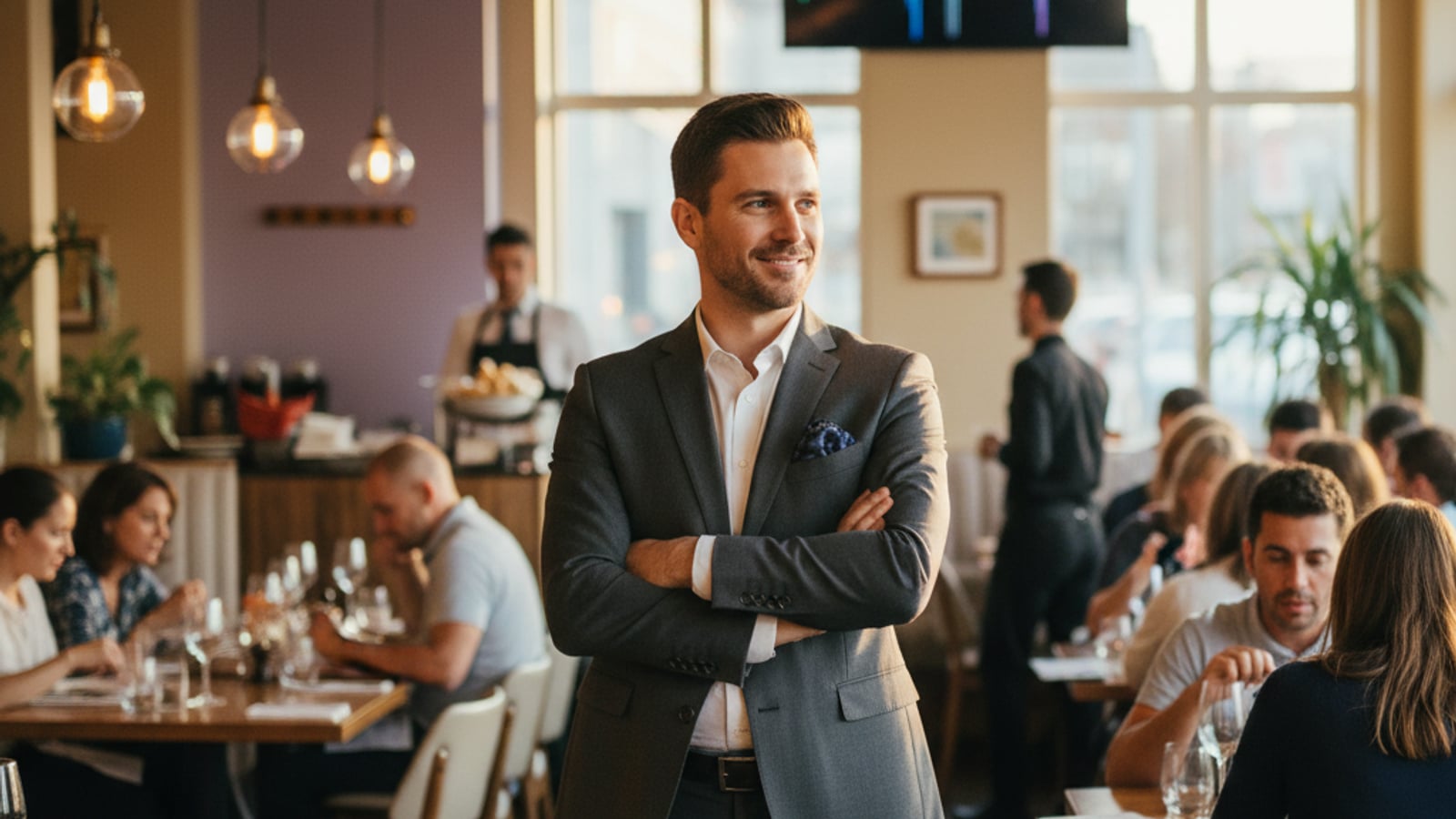
What we build for your restaurant
A first-phase deployment is scoped to ship in 2 to 4 weeks and covers the four flows in plain language. None of this requires the restaurant to replace its POS, change its reservation platform, or retrain the host stand on new software.
For catering and private-event inquiry response, the deliverable is a configured intake that catches inquiries from the website events form, the dedicated events email, and missed calls on the main line, and fires a first text or email within roughly 5 minutes. The message is written in the restaurant's voice, captures party size, target date, event type, and budget signal when offered, and routes replies to the manager in the channel the team already uses, with the conversation history attached.
For reservation confirmation and waitlist fill, the deliverable is a paced confirmation sequence tied to your reservation platform's booking record, a ranked waitlist built from guest preferences captured at booking, and a cancellation trigger that texts the open slot to the top candidate. The team sees who confirmed, from where, and the new booking gets recorded in the reservation platform the same way it already does.
For the first-time diner welcome and 30-day return prompt, the deliverable is a two-touch sequence that fires after a guest's first visit, written in the restaurant's voice, with a quiet 30-day check-in if the guest has not been back. The flow respects communication preferences and stops the moment the guest books again.
For lapsed-regular reactivation, the deliverable is a multi-touch sequence across the 90, 180, and 365-day windows, paced and tonally distinct, with the option to layer in special-occasion touches (birthday, anniversary, or seasonal menu launches) where the restaurant captures that information.
We also wire up a simple monthly report so the owner can see what the autopilot recovered — private-event bookings closed from after-hours inquiries, covers recovered from the waitlist, first-time diners who came back, and lapsed regulars reactivated — without having to dig through the reservation platform to find it. The goal is one screen that answers the only question that matters: did the system pay for itself this month, and where.
Outcomes you should expect
What this delivers
- Acknowledge catering and private-event inquiries inside 5 minutes — including the 11pm form fill — so a $5,000 corporate lunch booking doesn't drift to the venue that texted back the same night.
- Cut weeknight no-shows with a confirmation-and-recovery sequence that confirms, rebooks, or releases the table to a ranked waitlist before the seating window opens, typically recovering several covers per service.
- Bring first-time diners back inside 30 days with a paced welcome sequence in your restaurant's voice — instead of letting roughly 70% of first-timers quietly drift off without a second visit.
- Run multi-touch follow-up on lapsed regulars (90, 180, 365 days since last visit) so the recall list stops growing silently and quietly funds Wednesday-night covers.
- Free 3 to 8 hours of manager time per week currently spent triaging weekend voicemails, chasing event follow-ups, and trying to remember which inquiry was about which party size.
Industry data
By the numbers
Harvard Business Review research on 1.25 million leads across 42 companies found that firms contacting a prospect within one hour were nearly seven times as likely to qualify the lead as firms that waited even an hour longer — and more than 60 times as likely as firms that waited 24 hours or longer. For a catering or private-event inquiry, that gap is the difference between a booked event and a lost one.
OpenTable's industry research finds about 28% of Americans say they have no-showed a restaurant reservation in the past year, and prepaid or deposit-backed experiences can reduce no-shows by up to 44% — which makes the confirmation-and-recovery flow on the booking window one of the highest-leverage levers an independent restaurant has.
The National Restaurant Association's 2025 State of the Industry report projects $1.5 trillion in foodservice sales and notes strong consumer interest in experiential dining — 70% of consumers expressing interest in tasting events, 52% in private dinners with a chef, and 50% in cooking classes — making private-event and catering inquiry capture a growth lane for independents.
Industry data compiled by ChowNow shows 94% of U.S. diners consult online reviews before choosing where to eat, and 46% check Google reviews first — roughly twice the share who start with Yelp — which means a first-time diner's second visit often depends on whether the restaurant ever followed up after the first.
Illustrative scenario
What this typically looks like
The scenario below is illustrative — a representative outcome for a business that fits this service profile, not a claimed client engagement.
This is an illustrative scenario, not a description of a specific client engagement. It shows how the math typically lines up.
Picture a 70-seat neighborhood bistro open four nights a week plus Sunday brunch, with a small private-dining room that seats 20. Reservations come through OpenTable. The events inbox sees roughly 8 to 12 private-event or catering inquiries a month — corporate lunches, rehearsal dinners, the occasional full buyout. The current weeknight no-show rate runs around 12%. The manager handles all event follow-up personally, which means responses go out the next morning, or the next afternoon, or sometimes Monday. The recall list of lapsed regulars sits in nobody's queue.
In a typical month after the autopilot is live, that restaurant might see a couple of patterns shift. On the catering side, recovering even two private-event bookings a month that would have drifted to a faster-responding competitor — at the low end of a private-event check — is a four-figure monthly revenue lift that the bistro was previously absorbing as a lost-inquiry cost. On the reservation side, dropping the weeknight no-show rate from 12% toward single digits with a confirmation-plus-waitlist sequence typically recovers several covers per week, which compounds across the month.
On the first-time-diner side, even a modest lift in the percentage of first-timers who book a second visit inside 30 days adds up across a year — those guests are the regulars-in-progress that fund the slow weeknight covers. And the lapsed-regular flow tends to bring back a steady trickle of guests the bistro had quietly written off, often the highest-margin segment because they were already loyal once and the activation cost is essentially zero.
The actual numbers vary with the restaurant. The shape of the math does not. The pattern is recovered revenue from inquiries the restaurant already paid for in marketing, foot traffic, and the cost of standing the place up.
Common questions
What buyers ask before reaching out
What is lead nurture automation for a restaurant or cafe, in plain terms?
It is a set of automatic follow-up messages — text, email, and sometimes a missed-call callback — that fire when a catering or private-event inquiry comes in, when a reservation is approaching its seating window, when a table cancels and the waitlist needs a quick fill, or when a first-time diner walks out and the restaurant has 30 days to bring them back. The floor team still owns every guest relationship. The automation handles the first touch and the persistence, in the restaurant's own voice, so an 11pm corporate-lunch inquiry gets a same-night acknowledgement instead of sitting in a contact-form inbox until Monday.
Does this replace our host stand or our reservation platform?
Neither. The host stand still seats guests, runs the floor, and owns the conversation with anyone who replies. Your reservation platform — Toast, Square, Resy, OpenTable, Tock — still owns the booking record of truth. What changes is what nobody on the team currently has time for: the 11pm catering form fill that needs a response tonight, the ranked waitlist that needs a text the moment a table cancels, the first-time diner who came in Friday and needs a friendly nudge before they drift. The automation runs in the background, surfaces the replies, and hands them to a human.
Will this work with Toast, Square, Resy, OpenTable, or Tock?
We design the autopilot to sit alongside your existing POS and reservation platform rather than replace them. The exact reach into your platform depends on what your software exposes — some restaurants have us run the confirmation and recall flows through an existing add-on layer the platform supports, others run through a middle integration that reads the day's reservation list and writes back the outcome. We confirm what is reachable on the first call before quoting, with no promised deep integration we have not actually built.
What happens with after-hours catering and private-event inquiries — the 11pm form fill?
After-hours inquiries are the highest-leverage piece of the system because they have the most decay. A private-event form submitted at 11pm Thursday gets an auto-acknowledgement within a few minutes in the restaurant's voice, confirming receipt, capturing the party size, date, and event type, and offering a couple of next-step options — a callback window or a self-schedule link for a venue walkthrough. By morning, the inquiry is already warm and tagged. The manager picks up a conversation that is moving toward booked, not a cold form fill that is one of three the prospect sent out that night.
How does no-show reduction actually work?
Reservations get a confirmation sequence timed to the booking window — a friendly check-in the day before, an easy-to-reply nudge a few hours out, and a clean release-to-waitlist if the guest cancels. The waitlist is ranked, so the moment a four-top releases at 5pm for a 7:30 seating, the system texts the next candidate offering the slot. First confirm wins. The dining room does not have to chase the fill while seating the 6pm wave.
What about first-time diners — how does the autopilot bring them back?
A first-time diner who reserves through your platform or signs up for the wifi opt-in gets a short, warm welcome message a day or two later — not a coupon barrage, a real note in the restaurant's voice. If they have not been back in 30 days, a gentle prompt with a reason to come in (a seasonal dish, a chef's-night feature, a quiet Tuesday with a great wine list). The cadence respects opt-down preferences and stops the moment the guest books again. The goal is to flip the first-time diner from a one-and-done into a regular before the window closes.
How is this different from what our reservation platform already does for confirmations?
Reservation platforms handle the booking confirmation itself. They typically do not run a paced catering inquiry follow-up, a multi-touch lapsed-regular reactivation sequence, a first-time-diner welcome flow, or after-hours private-event capture. Most independents have the booking confirmation covered and four or five of those other flows running on someone's good intentions, which means rarely. The autopilot fills the gaps your reservation platform was not built to handle.
What does this cost and how long to set up?
Pricing depends on the size of the restaurant, the reservation and POS systems in use, and how many of the flows — catering and private-event capture, reservation confirmations and waitlist, first-time diner welcome, lapsed regular reactivation — go live in the first phase. Most single-location restaurants run a fixed-scope first phase in the low four figures of setup with a monthly run rate after that, and go live in 2 to 4 weeks. Scope and pricing get confirmed on a 15-minute call before any work starts, with no per-message charges that scale with cover volume.
Ready to see what this looks like for your business?
A free 15-minute call. We talk about your business, the time and revenue you'd unlock with the right automation, and what the first 30 days could look like.