AI Chat Assistant for Gyms and Fitness Studios — Book More Trials
A 24/7 chat assistant on your studio's website that answers schedule, pricing, and first-visit questions in your voice — then hands trial bookings to your platform and warm leads to your front desk.
The problem
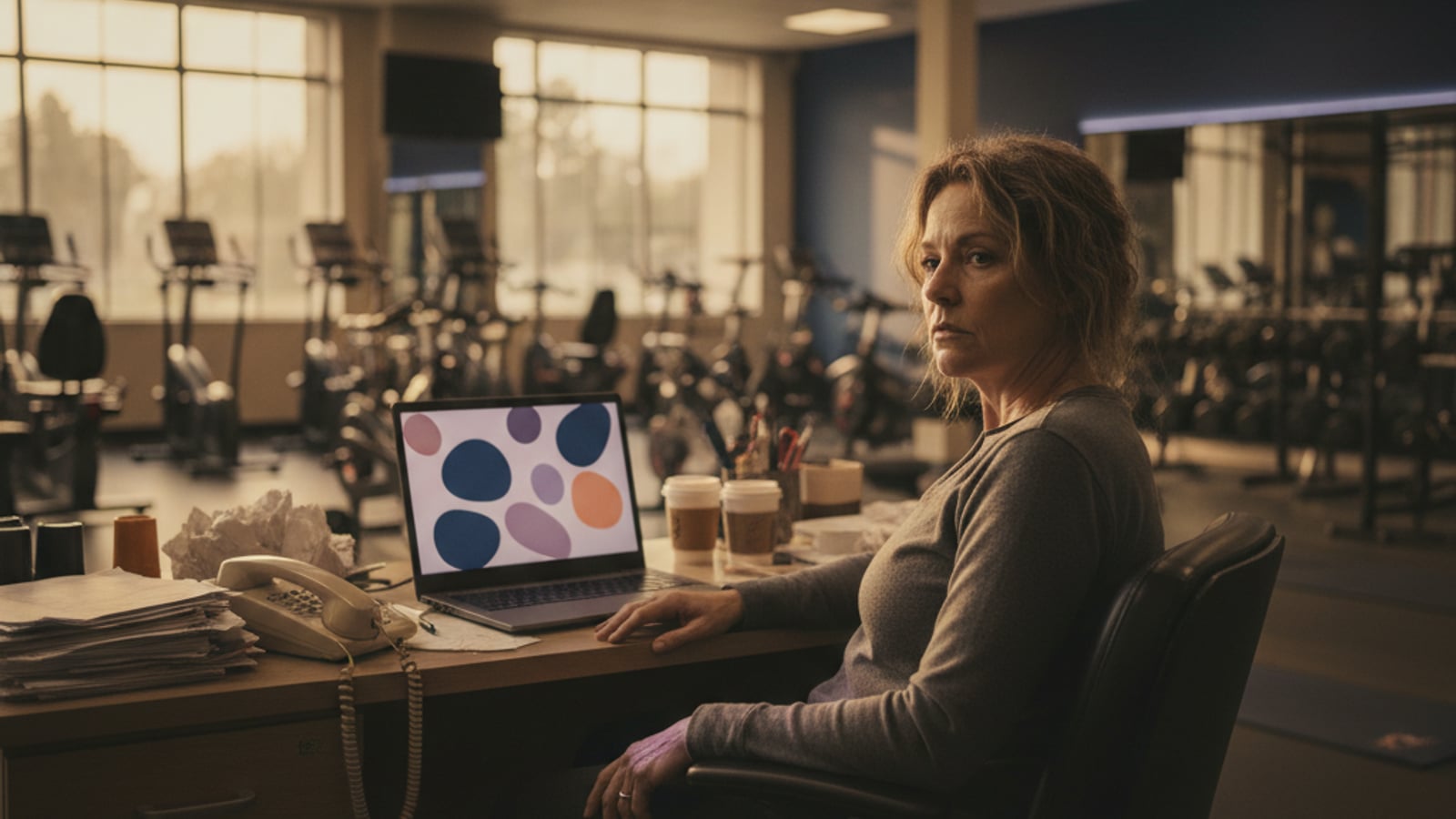
The day-to-day reality of running a fitness studio is that your front desk is answering the same handful of questions over and over, your website is silent at exactly the hours prospects are shopping, and the trial-class drop-off is wider than it should be — not because the studio is bad, but because the path from web visitor to booked trial has too many holes.
After-hours website silence
The hours math is unforgiving. Salesloft's Conversational AI Marketing Trends Report, drawing on more than 30 million Drift conversations, found 39% of all conversations happened outside normal 9-to-5 business hours and 41% of all meetings booked through the platform landed outside that window. The fitness version of that math is sharper, because someone deciding whether to try a 6am pilates class or a Saturday morning yoga flow is doing that decision-making on the couch at 9pm — not at their desk at 2pm. When your studio's website cannot answer their question at 9pm, they have three other studios open in three other browser tabs that can.
The same fifty FAQs every week
The questions themselves are not complicated. The newcomer wants to know whether you have parking, what they should wear, whether the 6am class is beginner-friendly, what the drop-in price is, how to redeem the trial-class offer they saw on Instagram, whether your reformer pilates is the same thing as mat pilates, what your cancellation window is. Your front desk knows all of these by heart. They have answered them fifty times this week. They will answer them fifty more next week. The problem is not the answer; it is the volume and the timing.
Front-desk minutes are retention minutes
The retention side of the problem is bigger. ABC Fitness, citing the Health & Fitness Association 2025 Benchmarking Report, notes that fitness operators lose roughly a third of their member base every twelve months, with most cancellations concentrated in the first three months and peak departures clustering between months two and three. The research Dr. Paul Bedford ran, which ABC Fitness highlights, found that even a single conversation between a member and fitness staff lifted the odds the member would come back the following month by 20%, with members who had four or more monthly staff interactions 80% more likely to keep attending. Every minute your front desk spends repeating your Saturday hours is a minute they are not spending on the member who needs the conversation that keeps them around.
Trial-class funnel leaks
And the trial funnel is where studios feel it most. Boutique studios — the Orangetheory, Pure Barre, neighborhood yoga, HIIT, and reformer formats — average 2.5 visits per month per user according to Health & Fitness Association 2025 foot-traffic data, compared with 5.2 monthly visits at luxury gyms. That means every new trial visitor carries outsized weight in a boutique studio's monthly economics. The 9pm web visitor who closes the tab because nobody answered their parking question is not a small loss — it is a missed trial, which is a missed conversion, which is months of membership revenue.
The frustrating part is that none of this is a coaching problem or a programming problem. It is a question-and-answer-throughput problem, and it gets solved with a question-and-answer-throughput tool.

What changes for your business
An AI chat assistant for a fitness studio fills the front-desk-after-hours gap and the front-desk-during-the-day-overflow gap at the same time, without putting another platform on the team's plate.
Always-on FAQ in your voice
The chat bubble lives in the corner of your studio's website, available every minute the site is up. A visitor who opens it gets a short friendly greeting in your studio's voice — warm, direct, not corporate. From there, the assistant answers the questions your front desk fields constantly: your class schedule for the rest of the week, your drop-in and membership pricing, your trial-class offer and how to claim it, your address and parking situation, what to wear, what a first visit looks like, your trainer specialties at a high level, your cancellation and no-show window, your holiday hours when they shift, current promotions.
Clean handoff to your booking platform
When the visitor wants to book a trial, the assistant hands them off to your booking platform — Mindbody, ABC Glofox, Wellness Living, Mariana Tek, or whatever you run — with their context and intent captured so the reservation is one or two clicks instead of a cold form. We do not claim a deep two-way integration we have not built; we wire up the cleanest handoff your platform supports. For studios where the booking flow is more involved or requires a phone conversation, the assistant captures the trial-class intent — name, phone, what format, preferred time window — and routes the pre-qualified lead to your front desk for a short morning callback.
Scoped escalation to a human
When the question falls outside the assistant's scope — an injury or accommodation, custom corporate-wellness pricing, a refund question, a complaint, anything where a wrong answer would cost you a member — the assistant says so plainly and offers to connect them to a real person. No bluffing, no bot loops, no broken promises. The scope is drawn in writing during the build with your input, and the assistant is told exactly when to escalate.
What changes for the studio: the after-hours visitor gets answered, the trial-class funnel stops leaking late-evening prospects, the front desk recovers the hours it currently loses to the same fifty FAQ questions, and the consistency of the studio's voice stops depending on who happens to be at the desk that afternoon. The new front-desk hire and your most senior coach now sound the same when the 9pm parking question lands.
What we build for a fitness studio
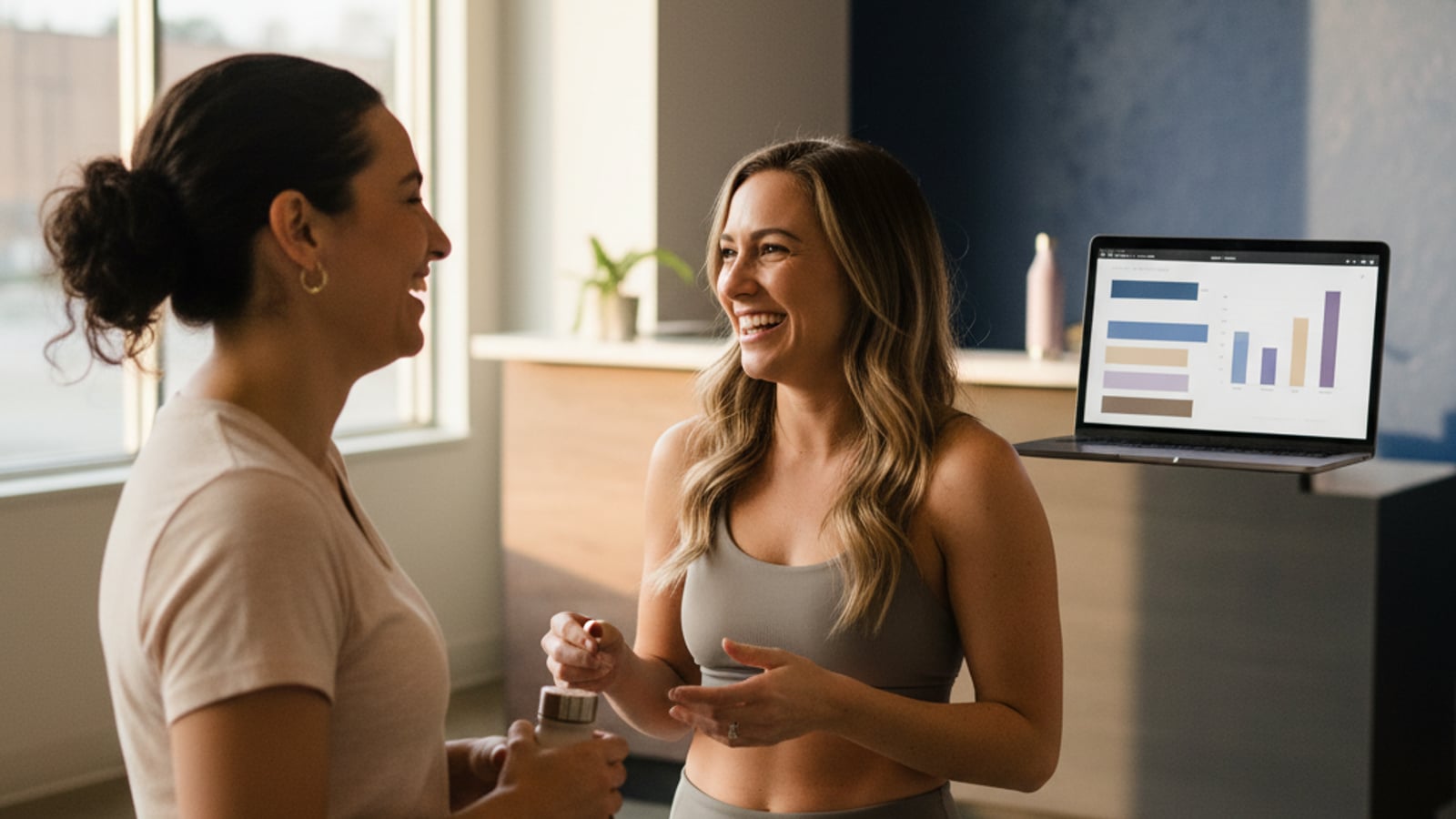
The build runs two to three weeks from kickoff to live and lands as a working chat assistant that your team does not have to think about after week three.
What you get when the build is done: a chat bubble on every page of your studio's website, in your brand and your voice, available 24/7. A defined scope of questions the assistant answers, sourced from your real studio information and reviewed in writing with your team before launch — your class schedule and how often it updates, your membership and drop-in pricing, your trial offer and how visitors claim it, your address and parking, what to wear and bring, what a first visit looks like, your trainer specialties at a high level, your cancellation and no-show policies, your holiday hours when they shift, current promotions. A defined list of questions that get escalated to a human — also in writing — covering injuries and accommodations, custom or corporate pricing, refund disputes, complaints, and anything where the wrong answer would cost you a member.
A clean handoff to your booking platform for trial-class reservations — Mindbody, ABC Glofox, Wellness Living, or Mariana Tek — using whichever surface (API, deep link, iframe) is the cleanest for your specific platform and version. No claimed deep integration we have not actually built. For studios where the booking handoff needs a human touch, a warm-lead capture that routes the prospect to your front desk with their full context in the morning callback list.
A simple weekly report so the owner can see what the assistant is doing — how many visitors engaged, what they asked about, how many were handed to the booking platform, how many were captured as front-desk leads, and the questions where the assistant said "I don't know" so the scope can keep getting sharper instead of going stale.
Opt-out and consent handling on any follow-up SMS triggered from the chat, so the program stays inside U.S. messaging compliance rules without the studio owner having to think about it.
You keep ownership of the studio's voice, the scope, the offer, and the member relationships. We do the building, the wiring, the testing, and the tuning. After it goes live, the only thing your team has to do is pick up the conversation when a warm handoff lands — which is what your front desk was hired to do in the first place.
Outcomes you should expect
What this delivers
- Catch the late-evening web visitor who is comparing studios on the couch — give them the schedule, the drop-in price, and a path to book a trial class before they close the tab and forget.
- Free the front desk from the same fifty questions about parking, what to wear, the cancellation window, and trainer specialties so coaches can actually welcome members on the floor.
- Hand off trial-class booking through the platform you already use (Mindbody, ABC Glofox, Wellness Living, Mariana Tek) — the assistant confirms the visitor's intent and routes them cleanly, no claimed deep integration required.
- Give consistent, on-brand answers regardless of who's on shift — the new front-desk hire and the owner's longest-tenured coach both sound like the studio when the question lands at 9pm.
- Capture warm leads after hours with name, phone, and what they were looking for — so the morning callback is short, warm, and the prospect has not already booked with the studio two blocks over.
Industry data
By the numbers
Salesloft's Conversational AI Marketing Trends Report, analyzing more than 30 million Drift conversations, found that 39% of all conversations happened outside of normal 9-to-5 business hours and 41% of all meetings booked through the platform were scheduled outside the 9-to-5 window — confirming that a meaningful share of buying intent shows up after the front desk has gone home.
The Health & Fitness Association's 2024 data, drawn from a nationally representative survey of 18,000 U.S. residents, found 77 million U.S. fitness facility members — a 5.6% year-over-year increase — with 32.3% of members participating in small-group training, a category that depends on class bookings and front-desk coordination to run.
ABC Fitness, citing the Health & Fitness Association 2025 Benchmarking Report, notes fitness operators lose roughly one-third of their member base every twelve months, with most cancellations concentrated in the first three months and peak departures occurring between months two and three.
Research by Dr. Paul Bedford, cited by ABC Fitness, found that even a single conversation between a member and fitness staff lifted the likelihood of returning the following month by 20%, with members who had four or more monthly staff interactions 80% more likely to keep attending — making front-desk time spent on members rather than routine FAQ a direct lever on retention.
Health & Fitness Association 2025 foot-traffic data shows boutique studios (including formats like Orangetheory Fitness and Pure Barre) averaged 2.5 visits per month per user, compared with 5.2 monthly visits at luxury gyms — meaning each booked class and each new trial visitor carries outsized weight in a boutique studio's monthly economics.
Illustrative scenario
What this typically looks like
The scenario below is illustrative — a representative outcome for a business that fits this service profile, not a claimed client engagement.
This is an illustrative scenario, not a description of a specific client engagement. It shows how the math typically lines up for a single-location boutique studio.
Picture a neighborhood pilates and yoga studio with 350 active members, an owner who teaches the morning classes, a front-desk lead, and a part-time evening receptionist who covers the 5-to-9 shift. The studio runs roughly twenty group classes a week across mat, reformer, and vinyasa. Website traffic sits around 250 unique visitors a week, with about 40% landing outside business hours. Today, the after-hours visitor either fills out a contact form that goes unread until morning or bounces because they could not find the Saturday schedule on a phone-sized screen. The front desk fields maybe seventy-five phone calls a week, of which a meaningful share are repeated parking, what-to-wear, and trial-offer questions.
After the chat assistant goes live, the late-evening visitor who would have closed the tab now gets their parking and schedule question answered in seconds and either books the Saturday morning trial through the platform or saves the studio for tomorrow. Across a typical month, the studio might recover three to six trial-class bookings that would have leaked overnight, and field thirty to forty after-hours questions the front desk would have either missed or had to triage Monday morning. At the same time, the front desk's phone gets noticeably quieter on the routine-FAQ side during open hours — a portion of the visitors who used to call to ask the price now get the answer from the chat and either book or move on. The freed minutes go where retention research says they should: into real conversations on the floor with members, which is where the studio's churn fight is actually won.
None of these numbers are a guarantee for any specific studio. They depend on your traffic, your trial offer, your conversion rate today, and how cleanly the assistant's scope is drawn. The shape of the math is what typically holds.
Common questions
What buyers ask before reaching out
What is an AI chat assistant for a fitness studio, in plain terms?
It is a chat bubble on the corner of your studio's website that answers the questions prospects and members actually ask — your class schedule, your membership and drop-in pricing, your trial-class offer, what to expect on a first visit, what to wear, where to park, what your trainers specialize in, your holiday hours. When the visitor wants to book a trial it walks them to your booking platform, and when the question gets complex or they ask for a person it captures their name and number and hands the conversation to your front desk. It runs every minute your website is up, including evenings, weekends, and the holiday hours your front desk does not cover.
Do you integrate deeply with Mindbody, ABC Glofox, Wellness Living, or Mariana Tek?
We work alongside your booking platform rather than rebuilding it. The assistant references your published schedule and pricing in its answers and hands the visitor off to your booking platform to actually complete a trial-class reservation or membership signup. We do not claim a deep two-way integration we have not built — the depth depends on what your platform exposes and which surface (their API, an iframe, a deep link) is the cleanest handoff. On the 15-minute call we walk through your stack and tell you exactly what we will and will not wire up.
Will the assistant give wrong answers about class times or pricing?
Not when it is built with proper guardrails, which is most of the work. The assistant is sourced from your real studio information — your published schedule, your membership and drop-in pricing, your trial offer, your cancellation policy, your studio voice — and is told plainly what it does not know. When a visitor asks about a special accommodation, a custom pricing situation, an injury or medical concern, or anything that needs a human, the assistant says so and offers to connect them with your front desk or owner. The fail mode is a bot that bluffs. The system we build refuses to bluff.
Can the chat actually book the trial class, or does it just collect leads?
Both, depending on what your booking platform supports. For most studios, the cleanest pattern is the assistant qualifies the visitor (which class, which day, are they a first-time visitor or returning, any constraints), then hands them off to your booking platform with the right link or deep link to confirm the slot. For studios where the booking flow is more involved, the assistant captures the trial-class intent — name, phone, format they are interested in, preferred time window — and routes it to the front desk for a short, warm callback in the morning instead of a cold contact form.
Will members find it annoying to talk to a bot instead of a coach?
Only when the bot is bad. A visitor who just wants to know whether you have parking at 9:30pm on a Tuesday does not want to leave a voicemail and wait for morning — they want the answer and to move on. A well-built assistant is upfront about being automated, answers fast in the studio's voice, and offers a human handoff on every screen. The visitors who want a coach get one when the studio is open. The visitors who just want your Saturday schedule get it in five seconds and either book the class or save the site for later.
What kinds of questions does the assistant handle, and what goes to a human?
Handled by the assistant: class schedule, regular and holiday hours, address and parking, drop-in and membership pricing, your trial offer, what to wear and bring, what a first visit looks like, trainer specialties at a high level, cancellation and no-show policies, current promotions, basic format explainers (what is HIIT, what is reformer pilates, what is mat versus heated). Passed to a human: injury or medical accommodations, custom corporate-wellness pricing, refund disputes, complaints, anything where the wrong answer would cost you a member. The boundary is drawn in writing during the build, with your input.
How long does it take to get the assistant live for our studio?
A typical build runs two to three weeks from kickoff to live. Week one is gathering your studio information — schedule, pricing, trial offer, voice samples, FAQ from your front desk — and defining the scope and guardrails in writing. Week two is wiring the assistant into your booking platform's handoff, your CRM if you have one, and any SMS or email follow-up. Week three is testing with real visitors and tuning the responses based on what your prospects actually ask, which is often slightly different from what the owner expects.
Does this replace our front desk or coaches?
No, and that is not the goal. The assistant absorbs the after-hours and routine load — the 9pm 'do you have parking' question, the Sunday morning schedule check, the prospect comparing three studios at lunch — so the front desk can spend its open hours actually welcoming members, running better intros, and supporting coaches on the floor. Research the Health & Fitness Association cites shows even a single staff conversation lifts the odds a member comes back the following month by 20%. The fewer of those minutes your front desk spends repeating your hours, the more they spend on the conversations that actually move retention.
What does this cost compared to staffing a live chat service?
A managed live chat service typically runs $2,000 to $3,000 a month for partial coverage and well into five figures for true 24/7 staffing. A studio chat assistant built with us is a one-time setup in the $3,000-$6,000 range plus a monthly platform cost of $50-$300 depending on conversation volume. For most single-location boutique studios, the assistant typically pays back the setup inside the first few months through captured after-hours trial inquiries alone. We walk through the math against your traffic and your average member value on the 15-minute call before anyone commits.
Ready to see what this looks like for your business?
A free 15-minute call. We talk about your business, the time and revenue you'd unlock with the right automation, and what the first 30 days could look like.